Home / Millets / Kodo Millet (Varagu) | Healthy, High Fiber, Nutritious

Kodo Millet (Varagu) | Healthy, High Fiber, Nutritious

(3 reviews)
₹ 112.00
Checking…
Size
500g ₹ 112.00
1Kg ₹ 218.00

Key Highlights

  • Unpolished whole grain kodo millet (varagu)
  • Grown without synthetic pesticides or fertilisers
  • Mild, nutty flavour with a slightly chewy texture
  • Cooks like rice in about 15-20 minutes
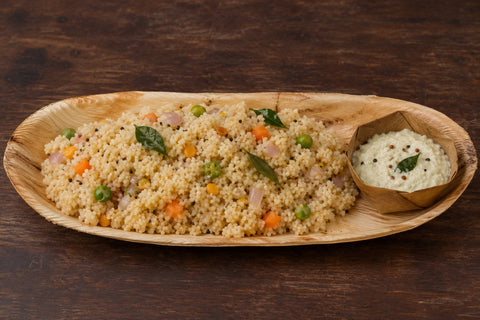
  • Use in upma, khichdi, pongal and porridge
  • No additives
Description
How to use
Nutrition
Certifications
Why choose
Sourcing
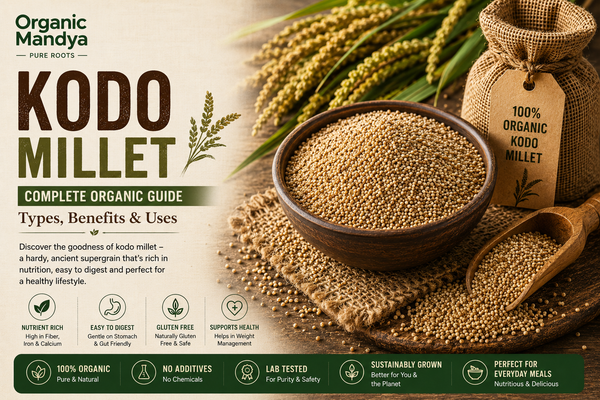
Organic Mandya Kodo Millet, also known as varagu, harka or kutki, is a small whole grain that has been grown in India for thousands of years.

It has a mild, nutty flavour and a slightly chewy texture. It takes on spices and tempering without overpowering them, so it fits easily into everyday meals.

Our kodo millet is unpolished and grown without synthetic pesticides, herbicides or fertilisers. Use it in place of rice in upma, khichdi, pongal, pilafs, salads and soups.

Read our millets guide: what millets are, how to cook them and recipes.

See all our millets for the full range, or get it with the other three small millets in our four-millet combo (kodo, foxtail, little and proso).

How to Cook Kodo Millet

  1. Rinse the millet thoroughly in water.
  2. Add water in a 1:2.5 ratio (one part millet to 2.5 parts water).
  3. Boil for about 15-20 minutes, until soft and fluffy.

Ways to Use It

  • Upma: Sauté with vegetables and a light tempering.
  • Khichdi: Cook with moong dal and mild spices.
  • Pongal: Cook soft for a comforting breakfast.
  • Porridge: Cook with water or milk for a warm breakfast.
  • Pilaf or salad: Cook, cool and toss with vegetables.

Kodo millet can also be ground into flour and used for flatbreads.

Storage

  • Store in an airtight container
  • Keep in a cool, dry place away from direct sunlight
  • Use a dry spoon and seal the container after use

Kodo millet is a whole grain. It contains dietary fibre, plant-based protein and minerals such as magnesium, iron and zinc.

It is naturally gluten-free and can be used in place of rice or wheat in many recipes.

Before any Organic Mandya product reaches your kitchen, it must successfully pass through our rigorous three-tier verification process:

  1. Two Independent Organic Certifications to guarantee authentic farming practices.
  2. Third-Party Lab Testing to ensure absolute quality and safety
View our transparency and lab reports here.

Choosing Organic Mandya Kodo Millet means choosing a simple whole grain for everyday meals.

  • Unpolished: The grain is not polished.
  • Clean farming: Grown without synthetic pesticides, herbicides or fertilisers.
  • Non-GMO: Our kodo millet is non-GMO.
  • Easy to cook: Cooks like rice in about 15-20 minutes.
  • Versatile: Works in upma, khichdi, pongal, porridge and salads.

Organic Mandya kodo millet is produced without synthetic pesticides, herbicides or fertilisers, and it is non-GMO. The grains are cleaned and packed without additives, and they are not polished.

Good kodo millet has a uniform colour, a dry, free-flowing texture and a mild earthy aroma, and is free from stones and husk pieces. We pack our kodo millet with these points in mind.

FAQ

What is kodo millet?
Kodo millet is a small whole grain, also known as varagu, harka or kutki. Organic Mandya kodo millet is unpolished and grown without synthetic pesticides or fertilisers.
What does kodo millet taste like?
It has a mild, nutty flavour and a slightly chewy texture. It takes on spices and tempering without overpowering them.
How do you cook kodo millet?
Rinse it well, then boil it with water in a 1:2.5 ratio (one part millet to 2.5 parts water) for about 15-20 minutes, until soft and fluffy.
Is kodo millet gluten-free?
Yes. Kodo millet is naturally gluten-free and can be used in place of wheat in many recipes.
Is this kodo millet polished?
No. Organic Mandya kodo millet is unpolished.
What dishes can I make with kodo millet?
Use it for upma, khichdi, pongal, porridge, pilafs and salads, or cook it like rice.
How should I store kodo millet?
Store it in an airtight container in a cool, dry place away from direct sunlight. Use a dry spoon and seal the container after use.
What are other names for kodo millet?
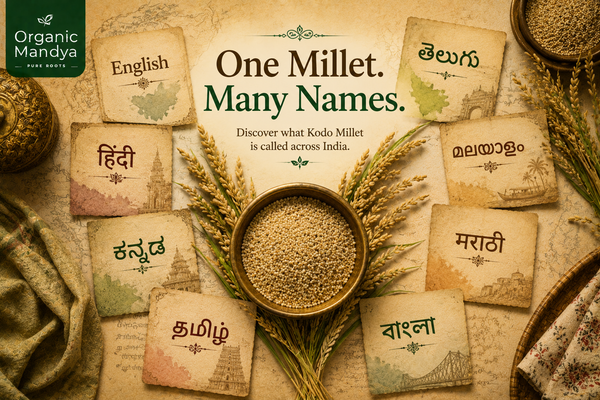
Kodo millet is also known as varagu, vargu, harka or kutki.
Which pack sizes and prices?
500 g (₹112) and 1 kg (₹218). Prices as on 10 November 2026; the page shows the current price. Also sold in the four-millet combo (kodo, foxtail, little and proso millet).
Reviews & ratings