


Rock Salt Benefits: Complete Guide to Health Effects & How to Use

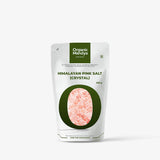
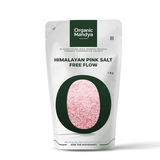
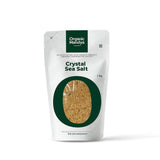
Rock salt (sendha namak in Hindi, saindhava lavana in Sanskrit) is an unrefined, naturally occurring mineral salt mined from underground salt deposits - primarily composed of sodium chloride (98%) with approximately 84 trace minerals including potassium, magnesium, calcium, iron, zinc, and manganese. According to Ayurvedic texts (Charaka Samhita, Ashtanga Hridayam), saindhava lavana is the only salt recommended for daily use - classified as laghu (light to digest), deepana (digestive stimulant), and tridoshic (balancing all three doshas). Rock salt is also the only salt permitted during Hindu fasting (vrat) across India, making it both a therapeutic and culturally significant mineral in Indian households.
What Is Rock Salt?
Rock salt (halite, NaCl) is crystalline sodium chloride formed by the evaporation of ancient seas over millions of years, now mined from underground deposits. In India, rock salt is mined primarily from the Salt Range in Pakistan-administered Kashmir (the original "Sindh" region - hence "saindhava" in Sanskrit) and from deposits in Rajasthan (Sambhar Lake region).
Regional names:
|
Language |
Name |
Notes |
|
Hindi |
Sendha Namak |
Most common commercial name |
|
Sanskrit |
Saindhava Lavana |
From "Sindhu" (Indus river region) |
|
Kannada |
Shende Uppu / Kallu Uppu |
Stone salt |
|
Tamil |
Kal Uppu / Induppu |
Stone salt / Indus salt |
|
Telugu |
Rathi Uppu / Sindhava Lavanam |
Crystal salt |
|
Marathi |
Shende Mith / Sendha Namak |
Same as Hindi |
|
Bengali |
Bit Nun / Sendha Namak |
Crystal salt |
|
Ayurvedic |
Saindhava Lavana |
The ONLY salt recommended for daily use in classical Ayurveda |
Rock Salt vs Table Salt vs Himalayan Pink Salt
|
Feature |
Rock Salt (Sendha Namak) |
Refined Table Salt |
Himalayan Pink Salt |
|
NaCl content |
~98% |
~99.5% |
~96-98% |
|
Trace minerals |
~84 (naturally occurring) |
Virtually none (stripped during refining) |
~84 (naturally occurring) |
|
Iodine |
Not naturally iodised |
Artificially iodised |
Not naturally iodised |
|
Processing |
Minimal (mined, washed, crushed) |
Extensive (refined, bleached, anti-caking agents) |
Minimal (mined, washed) |
|
Anti-caking agents |
None |
Sodium aluminosilicate or calcium silicate |
None |
|
Colour |
White to pink |
White |
Pink to red |
|
Ayurvedic classification |
Tridoshic (balances all doshas) |
Not recommended (over-processed) |
Similar to rock salt |
|
Fasting (vrat) use |
Permitted |
Not permitted |
Permitted in some traditions |
|
Cost |
Rs 50-100/kg |
Rs 20-30/kg |
Rs 200-500/kg |
|
Taste |
Mild, clean, slightly sweet |
Sharp, purely salty |
Mild, mineral-rich |
|
Source |
Underground mines (India/Pakistan) |
Sea water (refined) |
Khewra mine (Pakistan) |
The honest assessment: Rock salt and Himalayan pink salt are essentially the same mineral (halite from similar geological deposits) with slightly different trace mineral proportions producing different colours. The main health distinction is between unrefined salt (rock/pink) and refined table salt, not between different unrefined salts.
The iodine caveat: Rock salt and Himalayan pink salt are NOT naturally iodised. Iodine deficiency remains a public health concern in India (the goitre belt across the Himalayas). If switching entirely from iodised table salt to rock salt, ensure adequate iodine from other dietary sources (seafood, dairy, seaweed) or use iodised rock salt (available from some brands).
Nutritional and Mineral Profile
Per 100 g rock salt. Source: Published mineral analyses of Indian rock salt.
|
Mineral |
Approximate Content |
Role in Body |
|
Sodium (Na) |
~38-39 g |
Fluid balance, nerve function, and muscle contraction |
|
Chloride (Cl) |
~58-60 g |
Stomach acid production, fluid balance |
|
Potassium (K) |
~100-350 mg |
Blood pressure regulation, muscle function |
|
Calcium (Ca) |
~40-150 mg |
Bone health, nerve signalling |
|
Magnesium (Mg) |
~10-50 mg |
Muscle relaxation, enzyme function |
|
Iron (Fe) |
~1-5 mg |
Haemoglobin production (pink colour source) |
|
Zinc (Zn) |
~0.5-2 mg |
Immunity, wound healing |
|
Manganese (Mn) |
Trace |
Antioxidant enzyme cofactor |
|
Copper (Cu) |
Trace |
Iron metabolism, connective tissue |
|
Selenium (Se) |
Trace |
Thyroid function, antioxidant |
The trace mineral reality check: While rock salt contains "84 trace minerals," most are present in microgram to milligram quantities per 100 g. At the recommended daily salt intake of 5-6 g, the actual mineral contribution from rock salt is nutritionally modest. The primary health benefit is what rock salt DOES NOT contain (anti-caking agents, bleaching chemicals) rather than what it adds in trace minerals.
Seven Science-Backed Benefits
1. Cleanest Salt Form Available (No Chemical Additives)
Rock salt's primary benefit is its minimal processing. Unlike refined table salt (which contains anti-caking agents like sodium aluminosilicate, bleaching agents, and sometimes dextrose), rock salt is mined, washed, and crushed - nothing added, nothing removed. For health-conscious households seeking to minimise chemical additive exposure, rock salt is the cleanest sodium source available.
2. Ayurvedic Digestive Tonic (Deepana)
The Charaka Samhita classifies saindhava lavana as deepana (digestive fire stimulant) and pachana (digestive aid). Traditional Ayurvedic practice recommends rock salt over all other salts for daily use because it stimulates digestive enzyme secretion without the tamasic (dulling) quality attributed to refined salt.
3. Electrolyte Balance (Natural Potassium + Sodium)
Rock salt's natural potassium content (100-350 mg/100g) provides a built-in sodium-potassium balance that refined table salt (virtually zero potassium) cannot offer. This is nutritionally relevant because the sodium:potassium ratio directly influences blood pressure regulation.
4. Fasting Period Nutrition (Vrat Namak)
During Hindu fasting, rock salt is the only permitted salt. Its mild, clean taste and easy digestibility make it the traditional accompaniment for fasting foods (sabudana khichdi, bhagar pulao, kuttu ki puri, fruit chaat). See our [bhagar in English guide] for fasting food preparations using rock salt.
5. Respiratory Health Support (Salt Therapy / Halotherapy)
Rock salt inhalation (via salt rooms or neti pots using rock salt solution) has documented benefits for respiratory conditions. The saline solution reduces nasal inflammation, thins mucus, and has mild antimicrobial properties. Rock salt nasal irrigation (jala neti in yoga) is a centuries-old practice supported by modern ENT research.
6. Skin Exfoliation and Bathing
Rock salt dissolved in a warm bath water (500 g per full bath) creates a mineral-rich soak that gently exfoliates dead skin, reduces inflammation, and draws out impurities. Coarse rock salt mixed with sesame or coconut oil makes an effective body scrub.
7. Food Preservation
Rock salt has been used for centuries in Indian food preservation - brining, pickling, and dry-salting vegetables, fish, and meat. Its large crystal size and minimal moisture content make it more stable for preservation than fine table salt.
How to Use Rock Salt Daily
|
Use |
Amount |
Method |
Notes |
|
Daily cooking (salt replacement) |
5-6 g/day total (WHO limit) |
Replace table salt 1:1 |
Slightly less salty per gram; may need 10-15% more |
|
Fasting meals |
As per recipe |
Add to bhagar khichdi, sabudana, fruit chaat |
Only permitted salt during vrat |
|
Jala neti (nasal irrigation) |
1 tsp per 500 ml warm water |
Dissolve completely; use neti pot |
Lukewarm temperature; do not use cold |
|
Bath soak |
500 g per full bath |
Dissolve in warm water; soak 15-20 min |
Skin exfoliation; muscle relaxation |
|
Body scrub |
2 tbsp rock salt + 1 tbsp oil |
Gentle circular massage; rinse |
Weekly exfoliation |
|
Sole water (morning tonic) |
1 tsp saturated rock salt solution in 1 glass water |
Dissolve; drink on empty stomach |
Traditional Ayurvedic morning practice |
Side Effects and Precautions
-
Hypertension: Rock salt is still 98% sodium chloride. The WHO recommends less than 5 g total salt per day for adults. Rock salt does NOT have a "lower sodium" profile - the trace minerals do not meaningfully reduce sodium content. Hypertension patients must limit total salt (including rock salt) as prescribed by their physician.
-
Iodine deficiency risk: If replacing 100% of table salt with rock salt, ensure dietary iodine from seafood, dairy, or iodised rock salt. India's iodine deficiency disorders still affect millions.
-
Kidney disease (CKD): Sodium restriction applies to rock salt equally as to table salt. CKD patients must follow the nephrologist-prescribed sodium limits.
-
Overuse claims: Social media promotes rock salt sole water (concentrated salt water) as a cure-all. There is no clinical evidence that sole water provides benefits beyond basic hydration and sodium replenishment. Excessive consumption can cause hypernatraemia (dangerously high blood sodium).
How to Buy Authentic Rock Salt
-
Large crystals, not fine powder - authentic rock salt comes in large, irregular crystals (white, pink, or greyish) that must be crushed or ground at home
-
No anti-caking agents on label - rock salt should have zero additives
-
FSSAI certification visible
-
Source region declared - Sambhar (Rajasthan) or Himalayan (Pakistan/Kashmir border) deposits
-
Colour: white to pinkish - artificially dyed bright pink salt exists and should be avoided
Organic Mandya's [sendha namak (rock salt)] is sourced from natural deposits - unrefined, no additives, FSSAI certified.
About This Article
Sources: Charaka Samhita (saindhava lavana classification); FSSAI regulations; WHO salt intake guidelines (<5 g/day); published mineral analyses of Indian rock salt deposits; ENT research on saline nasal irrigation.
FAQs
Q1. What are the benefits of rock salt?
The 7 main rock salt benefits are: (1) cleanest salt form with no chemical additives; (2) Ayurvedic digestive tonic (deepana); (3) natural electrolyte balance from potassium + sodium; (4) the only permitted salt during Hindu fasting; (5) respiratory health support via salt therapy; (6) skin exfoliation and bathing mineral; and (7) natural food preservation agent.
Q2. Is rock salt better than table salt?
Rock salt is minimally processed (no anti-caking agents, no bleaching, no chemical additives) and contains approximately 84 trace minerals. Table salt is extensively refined with chemical additives but is artificially iodised (important for thyroid health). For daily cooking, rock salt is the cleaner choice IF you ensure adequate iodine from other dietary sources.
Q3. Can rock salt be used daily?
Yes - rock salt can replace table salt for daily cooking at the same quantity (1:1 replacement; may need slightly more as rock salt is marginally less salty per gram). The WHO limit of less than 5 g total salt per day applies equally to rock salt and table salt. Ensure dietary iodine from seafood, dairy, or iodised rock salt if replacing table salt entirely.
Q4. Is rock salt good for high blood pressure?
Rock salt is NOT a "low-sodium" alternative - it is 98% sodium chloride, comparable to table salt. Hypertension patients must limit total sodium intake regardless of salt type. Rock salt's trace potassium provides a marginal benefit for sodium-potassium balance, but this does not compensate for excessive sodium intake.


