


15 Rice Flour Recipes from Across India (Sweet, Savoury & Gluten-Free)

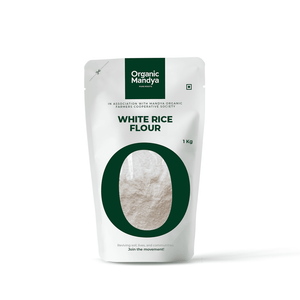
Rice flour (chawal ka atta, akki hittu in Kannada) is India's most versatile gluten-free flour - the base for over 50 traditional preparations spanning every Indian state, from Karnataka's akki rotti to Kerala's appam, Maharashtra's modak, and Tamil Nadu's kozhukattai. According to the ICMR Indian Food Composition Tables 2017, rice flour provides 6.8 g protein, 0.5 mg iron, 10 mg calcium, and 345 kcal per 100 g. While not the most nutrient-dense flour, its neutral flavour, binding properties, and gluten-free status make it the foundation of India's most beloved regional recipes. Here are 15 authentic preparations from across the country, organised by category.
Tips Before You Cook with Rice Flour
-
Stone-ground vs roller-milled: Stone-ground rice flour has a slightly coarser texture ideal for rotti and dosa. Roller-milled (fine) rice flour works better for sweets, appam, and smooth batters.
-
Fresh is best: Rice flour absorbs moisture from the air. Buy in small quantities and use within 2-3 months. Store in an airtight container in a cool, dark place.
-
No gluten is equal to no elasticity: Rice flour dough does not stretch like wheat dough. Use hot water for binding (gelatinises the starch), and handle gently.
-
Combining flours: Many recipes combine rice flour with urad dal flour (for fermentation), coconut (for moisture), or jaggery (for sweetness and binding).
Savoury Recipes
Recipe 1: Akki Rotti (Karnataka)
The signature Karnataka rice flour flatbread. Mix 1 cup rice flour with finely chopped onion, green chilli, curry leaves, grated carrot, fresh coconut, cumin, and salt. Add warm water gradually to form a soft, pliable dough (not sticky). Pat directly on a greased tawa (not rolled) into a thin circle. Drizzle oil around edges. Cook on medium heat for 2-3 minutes per side until golden and crispy. Serve with coconut chutney and butter. Calorie: ~150-180 per rotti.
Recipe 2: Neer Dosa (Coastal Karnataka / Mangalore)
The thinnest, most delicate dosa. Blend 1 cup rice flour with 2 cups water, 1/2 cup thin coconut milk, and salt to a very thin, pourable batter (consistency of milk). Heat a non-stick pan, pour batter in a thin stream to coat the entire pan, cover, and cook 1-2 minutes (do not flip). Roll or fold. Serve with chicken curry, fish curry, or coconut chutney. Calories: ~80-100 per dosa.
Recipe 3: Kerala Appam
The quintessential Kerala breakfast. Soak 2 cups of raw rice for 4 hours. Grind with 1/2 cup cooked rice and 1/4 cup coconut (creates the fermentation starter). Add 1 tsp yeast or toddy. Ferment 8-12 hours. Add salt and thin coconut milk to reach a thick batter consistency. Pour into a heated appam pan (appachatti), swirl to coat sides, cover, and cook 3-4 minutes. Centre is soft and spongy; edges are thin and crispy. Serve with stew or egg curry. Calories: ~130-150 per appam.
Recipe 4: Puttu (Kerala / Karnataka)
The steamed rice flour cylinder. Mix 2 cups rice flour with water gradually, rubbing between palms until the flour holds shape when pressed but crumbles when touched (not wet, not dry). Layer alternately with grated coconut in a puttu maker. Steam for 5-7 minutes. Push out the cylindrical puttu. Serve with kadala curry (chickpea curry) and banana. Calories: ~200-230 per serving.
Recipe 5: Idiyappam (String Hoppers - Kerala / Tamil Nadu)
The pressed rice noodle nests. Boil 1 cup water with salt and 1 tsp of oil. Add 1 cup rice flour off the heat and mix quickly to a soft dough. Press through an idiyappam maker onto greased plates in circular nests. Steam for 5-7 minutes. Serve with coconut milk curry or egg curry. Calories: ~120-140 per serving.
Recipe 6: Rice Flour Dosa (Chawal ka Dosa)
Quick, no-fermentation dosa. Mix 1 cup rice flour with 1/4 cup curd, water to reach thin batter consistency, cumin, and salt. Rest 15 minutes. Pour on hot tawa and spread thin. Cook until crispy edges. Serve with sambar and chutney. Calories: ~100-120 per dosa.
Recipe 7: Rice Flour Roti (Tandulachi Bhakri - Maharashtra)
Traditional Maharashtrian rice bread. Knead rice flour with hot water and salt into a soft dough. Pat into thick rotis. Cook on tawa for 3-4 minutes per side. Serve with thecha (green chilli chutney) and bhaji. Calories: ~140-160 per roti.
Recipe 8: Rice Flour Upma (Akki Uppittu - Karnataka)
Savoury rice flour porridge. Dry roast 1 cup rice flour for 2-3 minutes. Prepare tadka with oil, mustard seeds, urad dal, curry leaves, green chilli, and onion. Add 2.5 cups water. Once boiling, add roasted rice flour slowly, stirring continuously. Cook 5-7 minutes until thick. Serve with coconut chutney. Calories: ~180-200 per serving.
Sweet Recipes
Recipe 9: Modak (Maharashtra / Ganesha Festival)
Lord Ganesha's favourite sweet. Outer shell: boil 1 cup water with 1 tsp ghee and salt, add 1 cup rice flour, knead to soft dough. Filling: cook 1 cup grated coconut with 3/4 cup jaggery, cardamom until dry. Shape dough into small cups, fill, seal into modak shape. Steam 10-12 minutes. Calories: ~80-100 per modak.
Recipe 10: Kozhukattai (Tamil Nadu)
Tamil Nadu's steamed rice flour dumplings. Same principle as modak with regional filling variations - sweet (coconut + jaggery), savoury (dal + spices), or sesame-based. Shape into small balls or half-moon dumplings. Steam 10-12 minutes. Calories: ~60-80 per piece.
Recipe 11: Pitha (Assam / Odisha)
Eastern Indian rice flour cakes. Mix rice flour with warm water, shape into small cups. Fill with sesame and jaggery (til pitha) or coconut and jaggery (narikol pitha). Steam or shallow-fry. Traditional Bihu and Pongal festival sweet. Calories: ~70-90 per piece.
Recipe 12: Pathiri (Kerala Malabar)
Malabar rice bread for festive biryanis. Knead rice flour with hot water into a smooth dough. Roll into very thin circles (thinner than roti). Cook on dry tawa for 30 seconds per side. Soft, pliable, and delicate. Serve alongside Malabar biryani or meat curry. Calories: ~80-100 per pathiri.
Snack Recipes
Recipe 1: Murukku (Chakli - Pan-South India)
India's most popular savoury snack. Mix 2 cups rice flour with 1/2 cup urad dal flour, butter, cumin, sesame seeds, asafoetida, and salt. Knead with water into a smooth dough. Press through a murukku maker into spiral shapes directly into hot oil. Deep fry until golden and crispy. Store in airtight containers for 2-3 weeks. Calories: ~40-50 per piece.
Recipe 2: Rice Flour Pakoda (Akki Hittu Bajji)
Crispy fritters. Mix rice flour with onion, green chilli, curry leaves, cumin, salt, and water to a thick batter. Drop spoonfuls into hot oil. Fry until golden. Serve with tea and tomato chutney. Calories: ~50-60 per pakoda.
Recipe 3: Thattai (Tamil Nadu)
Crunchy rice flour crackers. Mix rice flour with roasted gram dal powder, butter, curry leaves, cumin, pepper, asafoetida, and salt. Knead with water. Flatten into thin circles. Deep fry until crispy. A Diwali essential across Tamil Nadu. Calories: ~30-40 per piece.
Rice Flour Nutrition per 100g
Source: ICMR IFCTs 2017.
|
Nutrient |
Per 100 g |
Notes |
|
Energy (kcal) |
345 |
Moderate |
|
Protein (g) |
6.8 |
Low; supplement with dal/curd |
|
Carbohydrates (g) |
78.2 |
High; starch-dominant |
|
Dietary Fibre (g) |
0.4 |
Very low; not a fibre source |
|
Fat (g) |
0.5 |
Very low |
|
Calcium (mg) |
10 |
Very low |
|
Iron (mg) |
0.5 |
Very low |
|
GI |
~95 |
Very high; blood sugar impact is significant |
|
Gluten |
None |
Naturally gluten-free |
The nutritional reality: Rice flour is calorie-dense but micronutrient-poor. It is valued for its culinary versatility and gluten-free status, not its nutritional density. For a more nutritious gluten-free flour, consider [ragi flour] (344 mg calcium, 3.9 mg iron, GI ~54) or jowar flour (10.4 g protein, 4.1 mg iron, GI ~55).
6. How to Make Rice Flour at Home
Wash 2 cups of raw rice (any variety). Soak for 2-4 hours. Drain completely.
Spread on a clean cloth and air-dry for 30-60 minutes until the surface is dry, but grains are not fully dehydrated.
Grind in a dry mixer/grinder to a fine powder (2-3 minutes in batches).
Sieve through a fine mesh. Re-grind the coarse residue.
Store in an airtight container. Use within 2-3 months.
For extra-fine flour (sweets/appam): Use aged rice (6+ months old), which has lower moisture content and grinds finer.
About This Article
Sources:
-
ICMR Indian Food Composition Tables 2017 - Rice flour nutritional data.
-
Traditional regional recipe documentation - Recipes verified against Karnataka, Kerala, Tamil Nadu, Maharashtra, Assam, and Odisha culinary traditions.
-
Atkinson et al., Diabetes Care, 2008 - Rice flour GI (~95).
FAQs
Q1. What can I make with rice flour?
Rice flour is used in 50+ traditional Indian recipes spanning every state. Key preparations include: akki rotti (Karnataka), neer dosa (Mangalore), appam (Kerala), puttu (Kerala/Karnataka), idiyappam (Tamil Nadu/Kerala), modak (Maharashtra), kozhukattai (Tamil Nadu), murukku (South India), pathiri (Malabar), rice flour dosa, upma, pakoda, and thattai. It works for savoury flatbreads, steamed dumplings, sweet festival foods, and crispy snacks.
Q2. Is rice flour gluten-free?
Yes - rice flour is naturally gluten-free. Rice (Oryza sativa) belongs to the grass tribe Oryzeae, taxonomically distant from wheat, barley, and rye. It is safe for celiac disease and non-celiac gluten sensitivity when sourced from dedicated GF facilities.
Q3. Is rice flour healthy?
Rice flour is calorie-dense (345 kcal/100g) but micronutrient-poor (very low iron, calcium, fibre). It has a very high GI (~95). For health, use rice flour as part of a varied diet, not as a primary flour. For more nutritious gluten-free alternatives, choose ragi flour (344 mg calcium), jowar flour (10.4 g protein), or foxtail millet flour (12.3 g protein). Rice flour is best valued for its culinary versatility rather than nutritional density.
Q4. What is the difference between rice flour and rice rava?
Rice flour (fine powder) is used for dosa, appam, sweets, and smooth batters. Rice rava (coarse semolina) is used for upma, idli, and preparations needing a textured, grainy result. Both come from the same rice grain - the difference is grind size.
Q5. Can diabetics eat rice flour preparations?
With caution - rice flour has a very high GI (~95), which spikes blood sugar rapidly. Diabetics should limit rice flour portions and pair with protein (dal, curd, egg) and fibre (vegetable sabzi) to slow glucose absorption. For a diabetic-friendly alternative, use ragi flour (GI ~54) or jowar flour (GI ~55) in similar preparations.


