


Yaksha Mahotsava Agarbatti: Your Complete Guide to Benefits, Uses & Why Organic Is Different

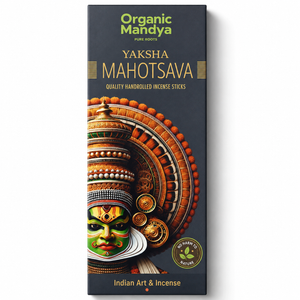
Yaksha Mahotsava Agarbatti is the third and final piece of Organic Mandya's premium Yaksha trilogy. "Mahotsava" means grand celebration or festival. This agarbatti's fragrance profile is the most complex and richest in the entire range - a full-spectrum aromatic experience that combines sweet florals, warm resins, aromatic spices, and a touch of citrus brightness into a fragrance that fills a room with joyful, abundant, celebratory energy. Where Yaksha Sanchara is the forest walk, and Yaksha Chaitanya is the inner journey, Yaksha Mahotsava is the arrival at celebration - the festival of the senses. It is the ideal choice for Diwali, Navratri, Ganesh Chaturthi, weddings, housewarmings, and any occasion that calls for richness, joy, and sacred abundance.
What Is Yaksha Mahotsava Agarbatti?
Yaksha Mahotsava Agarbatti is a handrolled organic incense stick (agarbatti) made using the traditional masala method - natural aromatic ingredients (herbs, resins, flower extracts, spice powders) are ground, blended with natural gum binder (jigit gum from Lannea coromandelica), and handrolled onto a bamboo core. No charcoal coating, no DPG (dipropylene glycol) dipping, no synthetic fragrance oils, and no chemical combustion accelerants.
The masala method is the original Indian approach to agarbatti making - used for over 5,000 years in Vedic rituals and temple worship. It produces agarbatti where the fragrance comes entirely from the natural ingredients in the paste, not from synthetic chemistry applied to a charcoal stick. Each Yaksha Mahotsava Agarbatti stick burns for approximately 25-35 minutes, producing light, fragrant herbal smoke with a rich, festive, celebratory character.
India's agarbatti market (over Rs 12,000 crore annually) is dominated by machine-dipped charcoal agarbatti using synthetic fragrance in DPG solvent. These commercial sticks release DPG vapour, synthetic musk compounds, and charcoal combustion particles when burned - all respiratory irritants. Organic Mandya's Yaksha Mahotsava Agarbatti eliminates all synthetic chemical exposure while delivering genuine natural fragrance from real botanical ingredients.
How Is Organic Yaksha Mahotsava Agarbatti Different from Commercial Agarbatti?
|
What We Are Comparing |
Organic Mandya Yaksha Mahotsava Agarbatti |
Commercial Agarbatti |
|
Fragrance source |
Natural herbs, resins, flower/spice extracts |
Synthetic fragrance oil in DPG solvent |
|
Base coating |
Herb-resin paste (masala method) |
Charcoal powder + wood dust (black coating) |
|
Binding |
Natural jigit gum |
Chemical binders |
|
DPG |
Zero |
Primary fragrance carrier |
|
Making |
Handrolled by artisans |
Machine-dipped (industrial) |
|
Smoke |
Light grey-white; complex, layered aroma |
Dark grey-black; one-dimensional synthetic smell |
|
Ash |
Light, natural |
Heavy, black, charcoal-laden |
|
After-smell |
Pleasant herbal residue |
Chemical residue (often headache-inducing) |
|
Respiratory impact |
Traditional herbal fumigation |
DPG vapour + synthetic chemical exposure |
Why this matters daily: The average Indian household burns 2-3 agarbatti sticks per day. Over a year, that is 300-600 hours of smoke inhalation. Switching from synthetic to organic changes 300-600 hours of chemical exposure into traditional herbal fumigation - every single year.
What Are the Benefits of Yaksha Mahotsava Agarbatti?
1. Full-spectrum celebration fragrance for festivals and special occasions. Mahotsava's multi-layered complexity - floral sweetness, resinous warmth, spice vibrancy, and citrus brightness - creates an atmosphere of richness and joy that single-note agarbatti cannot achieve. It is designed to make special occasions feel genuinely special through fragrance.
2. The complete Yaksha experience in one stick. While Sanchara is fresh/green and Chaitanya is deep/resinous, Mahotsava integrates elements of both plus additional floral and spice complexity. It is the most complex agarbatti in the range.
3. Guest-welcoming and hospitality fragrance. The rich, warm, universally pleasant profile makes Yaksha Mahotsava the ideal choice when hosting guests. It communicates abundance, welcome, and care - the olfactory equivalent of a decorated home and a warm greeting.
4. All the benefits of organic handrolled agarbatti. Zero DPG, zero synthetic fragrance, zero charcoal base, antimicrobial herbal smoke, and traditional masala method production.
How Do I Use Yaksha Mahotsava Agarbatti?
|
Setting |
Why Yaksha Mahotsava |
Time |
|
Festival pooja |
Rich, celebratory atmosphere |
Festival days |
|
Diwali/Navratri/Ganesh Chaturthi |
Full-spectrum festive fragrance |
Specific festivals |
|
Guest hosting |
Welcoming, abundant atmosphere |
Before guest arrival |
|
Weddings and housewarmings |
Auspicious, joyful energy |
Special occasions |
|
Weekend special pooja |
Elevate regular practice to festive level |
Weekends/special days |
Safety: Use a proper agarbatti holder on a fireproof surface. Ensure room ventilation. Keep away from flammable materials. Never leave burning agarbatti unattended. Each stick burns 25-35 minutes.
The Art of Celebratory Fragrance in Indian Culture
Indian celebrations have always been multi-sensory experiences. Diwali has its diyas (light), rangoli (visual art), mithai (taste), and agarbatti (fragrance). Navratri has its garba music, dandiya rhythms, flower decorations, and incense. Weddings have their haldi ceremony, floral mandap, feast flavours, and the ever-present dhoop and agarbatti smoke. Fragrance is not incidental to Indian celebration - it is integral.
Yaksha Mahotsava is designed as the fragrance component of celebration. Its complex, multi-layered profile includes sweet floral notes (associated with abundance and fertility in Indian tradition), warm resinous notes (associated with sacred space and divine blessing), aromatic spice notes (associated with vitality and joy), and bright citrus notes (associated with freshness and new beginnings). Each note carries symbolic meaning in addition to its aromatic function, making Mahotsava a fragrance that celebrates on multiple levels simultaneously.
For the most impactful festival experience, light Yaksha Mahotsava 15-20 minutes before the celebration begins - let the fragrance build and fill the space so that when guests arrive or when pooja commences, the atmosphere is already charged with celebratory energy.
The Complete Organic Mandya Agarbatti Range
|
Agarbatti |
Fragrance Profile |
Best For |
Personality |
|
7 Herbs |
Balanced Ayurvedic herbal blend |
Daily pooja; all-purpose |
The everyday essential |
|
Wood Spice |
Warm woody + spice (sandalwood, cinnamon) |
Evening meditation; winter |
The grounding anchor |
|
Champaka |
Sweet, rich floral (champaka flower) |
Morning pooja; devotional |
The temple flower |
|
Yaksha Sanchara |
Fresh, green, forest-like |
Morning; daytime freshness |
The nature walk |
|
Yaksha Chaitanya |
Deep, resinous, sacred |
Deep meditation; spiritual |
The inner journey |
|
Yaksha Mahotsava |
Rich, complex, celebratory |
Festivals; guests; occasions |
The grand celebration |
Building your organic agarbatti collection: Start with 7 Herbs for daily pooja (most versatile). Add Wood Spice for evening meditation and Champaka for morning devotion. Upgrade to the Yaksha trilogy for premium experiences - Sanchara for refreshing mornings, Chaitanya for deep practice, and Mahotsava for celebrations.
If you're exploring home essentials beyond a single product, it's worth understanding how agarbatti, sambrani cups, incense blends, and other natural home essentials compare. Read our Complete Home Essentials Guide to learn how each product is made, its traditional uses, benefits, and how to choose authentic, naturally crafted home essentials for your home and family.
Who Should Switch to Organic Agarbatti?
Every Indian household that burns agarbatti daily should switch to organic. The arithmetic is clear: daily burning x synthetic chemicals x 365 days/year x decades = cumulative respiratory and health burden that is entirely avoidable. Organic herbal agarbatti provides the same spiritual function, the same home fragrance, and the same cultural tradition - without the synthetic DPG, charcoal particles, and artificial fragrance chemicals.
The transition is effortless: same holder, same daily ritual, same number of sticks. Just different (genuinely natural) sticks. The fragrance improvement is immediately noticeable - complex, layered, and subtle instead of one-dimensional and sharp. The light-coloured ash (instead of black charcoal residue) is a daily visual reminder that what your family breathes is genuinely clean.
How Do I Know This Agarbatti Is Genuinely Organic and Handrolled?
Break a stick and examine: organic masala agarbatti has a brown-green, textured, herb-flecked coating. Commercial charcoal agarbatti has a smooth, uniform black coating. Smell unlit: organic has mild natural herbal scent; commercial has strong synthetic fragrance even unlit. Check the ash after burning: organic produces light whitish ash; charcoal produces heavy black ash. Quality tested at trust.organicmandya.com. FSSAI licence (#11219322000392).
Looking to build a healthier, chemical-free kitchen beyond this topic? Explore our comprehensive guide covering everything from cold-pressed oils and A2 dairy to millets, spices, dals, fruits, vegetables, natural sweeteners, snacks, home essentials, and more. It brings together practical buying advice, ingredient comparisons, and trusted information to help you make informed choices for every part of your kitchen.
Explore the Complete Chemical-Free Kitchen Guide
FAQs
Q1. What does Yaksha Mahotsava smell like?
Rich, complex, multi-layered. Sweet florals + warm resins + aromatic spices + bright citrus notes. The most full-spectrum fragrance in the range. Joyful, abundant, and celebratory - the olfactory equivalent of a decorated festival home.
Q2. When should I use Yaksha Mahotsava?
Festivals (Diwali, Navratri, Pongal, Ugadi), guest hosting, weddings, housewarmings, and any occasion that calls for richness and celebration. Not for everyday use (save it for special moments to preserve its "occasion" feeling).
Q3. Can I use all three Yaksha agarbattis together?
While each is designed to stand alone, experienced incense users sometimes light Sanchara first (to set a fresh base), then Chaitanya (to deepen), then Mahotsava (to celebrate). This "fragrance journey" follows the trilogy's narrative arc: nature journey - inner awakening - celebration.
Q4. How many sticks should I burn per day?
1-2 sticks per day is typical (morning and/or evening pooja). Each burns 25-35 minutes. Ensure ventilation during and after. Even organic herbal smoke is still smoke - good ventilation is always recommended.
Q5. Are organic agarbatti sticks more expensive than regular?
Yes - approximately 2-3x the price of commercial sticks. The cost reflects real herbs and resins (vs cheap charcoal + synthetic fragrance), handrolling by artisans (vs machine dipping), and organic ingredient sourcing. At Rs 3-5 per stick for 25-35 minutes of genuine herbal fragrance, the premium is modest compared to the synthetic chemical exposure it eliminates.


