


Barley Dalia: Your Complete Guide to Benefits, Nutrition & Uses

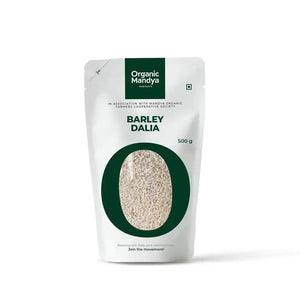
Barley dalia (jau dalia) is the broken/cracked form of barley grain - the convenience version that cooks faster (15-20 minutes vs 25-30 for whole pearl barley) while delivering the same heart-health beta-glucan, high fibre, and cholesterol-lowering benefits. Like pearl barley, barley dalia contains ~5g beta-glucan per 100g (the soluble fibre with FDA-approved claims for LDL cholesterol reduction). The smaller, cracked pieces cook into a creamy porridge texture that is ideal for breakfast dalia, savoury upma, and baby food. Organic Mandya's organic barley dalia (Hordeum vulgare, broken form) is sourced from certified organic farms in India's barley-growing regions. Barley is one of the oldest cultivated grains in human history, with archaeological evidence from the Fertile Crescent dating back 10,000 years. In India, barley (jau) has been mentioned in Vedic texts and Ayurvedic literature as a cooling, strengthening, and cholesterol-balancing grain, minimally processed (cracked, not refined), and retains the full beta-glucan and fibre content of whole barley grain. The cracking process simply breaks the grain into smaller pieces for faster cooking without removing the fibre-rich layers.
What Is Barley Dalia?
Barley Dalia is one of India's traditional grains - cultivated for thousands of years before rice and wheat monoculture replaced millet diversity. Millets are small-seeded, drought-resistant grasses that grow with minimal water and no synthetic inputs. The Indian government's International Year of Millets initiative (2023) helped revive awareness of these nutritionally superior, climate-smart grains.
Organic Mandya's organic barley dalia is sourced from NPOP-certified organic farms in Karnataka, unpolished (retaining the full bran layer with its fibre, iron, and antioxidants), and lab-tested per batch for pesticide residues. Reports at trust.organicmandya.com.
How Is Organic Barley Dalia Different from Regular?
|
What We Are Comparing |
Organic Mandya |
Regular Market |
|
Farming |
Certified organic (NPOP); zero pesticides |
Conventional; pesticides possible |
|
Processing |
Unpolished (bran intact) |
Often polished (bran removed) |
|
Fibre |
Full (bran layer retained) |
Reduced if polished |
|
Minerals (iron, zinc, calcium) |
Full (concentrated in bran) |
Lower if polished |
|
Certifications |
NPOP + FSSAI (#11219322000392) |
FSSAI only |
|
Lab reports |
trust.organicmandya.com |
Not published |
What Are the Health Benefits of Barley Dalia?
1. Same beta-glucan as pearl barley - faster cooking. Barley dalia provides ~5g beta-glucan per 100g (FDA-approved for cholesterol reduction) but cooks in 15-20 minutes instead of 25-30 for whole pearl barley. Same nutrition, more convenience.
2. Ideal porridge texture. The cracked grains cook into a creamy, slightly chewy porridge that is comforting, filling, and easy to flavour with jaggery, fruits, or savoury spices. India's healthiest dalia - delivering the beta-glucan that wheat dalia cannot provide.
3. High total fibre (~15-17 g/100g). Beta-glucan (soluble) + insoluble fibre provide cholesterol reduction, slow glucose release, gut health support, and exceptional satiety.
4. High protein (12.5 g/100g). Comparable to wheat dalia but with the added benefit of beta-glucan that wheat does not provide.
5. Prebiotic fibre for gut health. Beta-glucan is fermented by beneficial gut bacteria, producing butyrate and other short-chain fatty acids that support colon health.
6. Versatile savoury and sweet preparations. Works as sweet breakfast porridge (with jaggery, fruits), savoury upma (with vegetables, spices), and baby food (soft, easy to digest).
What Is Inside Barley Dalia? (Nutrition per 100g)
|
Nutrient |
Per 100g |
Wheat Dalia |
Advantage |
|
Beta-glucan |
~5 g |
0 g |
Unique cholesterol-lowering fibre |
|
Total fibre |
~15-17 g |
~4-6 g |
3-4x more fibre |
|
Protein |
12.5 g |
11.8 g |
Comparable |
|
Iron |
3.6 mg |
4.9 mg |
Slightly less |
|
Calories |
354 kcal |
346 kcal |
Similar |
|
Gluten |
Present |
Present |
Neither is celiac-safe |
Source: ICMR IFCTs, 2017; USDA data
How Do I Use Barley Dalia Every Day?
|
Preparation |
How |
Best For |
|
Barley dalia porridge (sweet) |
Boil in milk/water, add jaggery, cinnamon, nuts |
Heart-healthy breakfast |
|
Barley dalia upma (savoury) |
Temper mustard, curry leaves; cook with vegetables |
Savoury breakfast |
|
Barley dalia khichdi |
Cook with moong dal, ghee, turmeric |
Complete comfort meal |
|
Barley dalia soup |
Cook in broth with vegetables until creamy |
Winter meal; recovery food |
|
Baby food |
Cook very soft in water/milk; mash smooth |
8+ months complementary food |
If you're exploring traditional grains beyond a single millet, it's worth understanding how ragi, jowar, bajra, foxtail millet, little millet, kodo millet, barnyard millet, browntop millet, proso millet, and other millets compare. Read our Complete Millets Guide to learn about the nutritional benefits of each millet, their cooking methods, everyday uses, and how to choose authentic, organically grown millets for your family's healthy meals.
Who Should Try Barley Dalia?
ICMR-NIN 2024 dietary guidelines recommend millet inclusion for all Indians. The optimal approach is millet rotation across the week - different millets at different meals - to access varied nutritional profiles. Barley Dalia fits naturally into this rotation. Store in an airtight container in a cool, dry place for 6-12 months. Grind into flour as needed (use within 2-3 months after grinding).
How Do I Know This Barley Dalia Is Really Organic?
NPOP certification, FSSAI licence (#11219322000392), batch-level lab reports at trust.organicmandya.com. Unpolished millet has visible bran texture and natural colour variation. Polished millet is uniformly smooth and pale - and has lost the fibre, iron, and antioxidants that make millets nutritionally superior to rice.
Why Choose Organic Barley, Dalia
Barley dalia is the practical form of pearl barley for Indian families who love dalia-style preparations. While pearl barley grains are whole and chewy (great for soups and salads), barley dalia is cracked into smaller pieces that cook into the familiar creamy-porridge texture that Indians associate with breakfast dalia.
The health math is simple: if you currently eat wheat dalia for breakfast (a common health-conscious choice), switching to barley dalia adds beta-glucan that wheat does not have - gaining the FDA-approved cholesterol-lowering benefit without changing your morning routine. Same preparation method, same timing, same utensils. Just swap the grain.
For families with high cholesterol (and there are many - cardiovascular disease is India's leading cause of death), barley dalia porridge every morning is a clinically supported dietary intervention. At Rs 80-120 for 500g (lasting approximately 8 days of daily porridge), it is also among the most affordable health interventions available.
The morning swap that lowers cholesterol: If you currently eat wheat dalia for breakfast (a common health-conscious choice in Indian households), switching to barley dalia is the simplest heart-health upgrade available. Same cooking method (boil in water/milk, stir, add toppings). Same cooking time (15-20 minutes). Same texture (creamy porridge). Same utensils. The only change is the grain - and that change adds ~5g beta-glucan that wheat dalia does not have, providing the FDA-approved cholesterol-lowering benefit without any lifestyle disruption.
Barley dalia for children's breakfast: Children often prefer creamy, slightly sweet porridge over dry rotis or plain rice. Barley dalia cooked in A2 milk with jaggery, cinnamon, and a few cashew pieces creates a nutritionally dense breakfast that children enjoy. The beta-glucan supports developing immune systems, the protein supports growth, and the fibre supports healthy digestion from an early age.
Cost-effectiveness of barley dalia for heart health: A 500g packet of organic barley dalia (Rs 80-120) provides approximately 8 breakfast servings. That is Rs 10-15 per heart-healthy breakfast serving - cheaper than most breakfast cereals, significantly cheaper than cholesterol-lowering supplements, and clinically validated.
Looking to build a healthier, chemical-free kitchen beyond this topic? Explore our comprehensive guide covering everything from cold-pressed oils and A2 dairy to millets, spices, dals, fruits, vegetables, natural sweeteners, snacks, home essentials, and more. It brings together practical buying advice, ingredient comparisons, and trusted information to help you make informed choices for every part of your kitchen.
Explore the Complete Chemical-Free Kitchen Guide
FAQs
Q1. What is barley dalia?
Barley dalia is broken/cracked barley grain - the convenience form of pearl barley that cooks faster (15-20 min vs 25-30 min) while providing the same beta-glucan, fibre, and protein. Ideal for porridge, upma, and khichdi.
Q2. Is barley dalia good for cholesterol?
Yes - contains ~5g beta-glucan per 100g. 3g/day of beta-glucan reduces LDL cholesterol by 5-10% (FDA-approved claim). A 60g serving of barley dalia porridge daily provides the therapeutic dose.
Q3. How is barley dalia different from wheat dalia?
Barley dalia has beta-glucan (wheat has none), higher total fibre, and a cholesterol-lowering health claim. Wheat dalia is more common and cheaper but lacks the heart-health benefits. Barley dalia is NOT gluten-free (barley contains hordein).
Q4. Can babies eat barley dalia?
Yes, from 8+ months. Cook very soft in water or milk, mash to a smooth consistency. The beta-glucan and fibre are gentle on the gut and provide prebiotic support for the developing microbiome. Start with thin, well-cooked porridge and gradually increase consistency as the baby accepts it. The slightly nutty, sweet flavour of barley dalia is naturally appealing to most babies without needing added sugar. Note: barley contains gluten; not suitable for celiac.
Q5. How do I cook barley dalia?
Rinse 1 cup barley dalia. Dry roast 2 min for nutty flavour. Add 3 cups water/milk. Boil, reduce heat, cover, simmer 15-20 min until soft and creamy. Add jaggery + cardamom for sweet porridge, or vegetables + spices for savoury upma.


