


Barnyard Millet: Your Complete Guide to Benefits, Nutrition & Uses

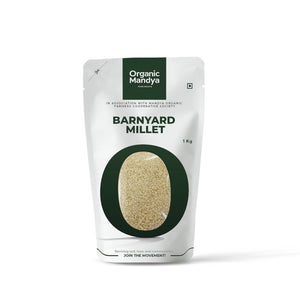
Barnyard millet (sanwa / udalu / jhangora) is India's premier fasting grain and one of the lowest-calorie millets available. At approximately 300 kcal per 100 g - the lowest of any common grain - barnyard millet is the ideal choice for weight management, fasting days, and calorie-controlled diets. It is one of the few grains approved for vrat/upvas across Hindu, Jain, and other Indian fasting traditions. During Navratri alone, millions of Indian families seek barnyard millet as their primary grain for nine consecutive days. The demand for quality organic barnyard millet spikes dramatically during these festival periods. Organic Mandya ensures year-round availability so families can stock up before fasting seasons and also enjoy barnyard millet's exceptional low-calorie nutrition on regular days throughout the year because it is not classified as a "cereal" in traditional dietary frameworks. Beyond fasting, barnyard millet provides excellent fibre, iron, and a remarkably low glycaemic index. Organic Mandya's organic barnyard millet (Echinochloa frumentacea) is sourced from certified organic farms in Karnataka. Known as sanwa in Hindi, udalu in Kannada, kuthiraivali in Tamil, and jhangora in Uttarakhandi, barnyard millet has been a staple of hill farming communities across India for centuries. It matures in just 45 days (the fastest of any grain crop), making it valuable for crop rotation and food security in rain-fed agriculture, unpolished, and ready to cook as a rice replacement.
What Is Barnyard Millet?
Barnyard Millet is one of India's traditional grains - cultivated for thousands of years before rice and wheat monoculture replaced millet diversity. Millets are small-seeded, drought-resistant grasses that grow with minimal water and no synthetic inputs. The Indian government's International Year of Millets initiative (2023) helped revive awareness of these nutritionally superior, climate-smart grains.
Organic Mandya's organic barnyard millet is sourced from NPOP-certified organic farms in Karnataka, unpolished (retaining the full bran layer with its fibre, iron, and antioxidants), and lab-tested per batch for pesticide residues. Reports at trust.organicmandya.com.
How Is Organic Barnyard Millet Different from Regular?
|
What We Are Comparing |
Organic Mandya |
Regular Market |
|
Farming |
Certified organic (NPOP); zero pesticides |
Conventional; pesticides possible |
|
Processing |
Unpolished (bran intact) |
Often polished (bran removed) |
|
Fibre |
Full (bran layer retained) |
Reduced if polished |
|
Minerals (iron, zinc, calcium) |
Full (concentrated in bran) |
Lower if polished |
|
Certifications |
NPOP + FSSAI (#11219322000392) |
FSSAI only |
|
Lab reports |
trust.organicmandya.com |
Not published |
What Are the Health Benefits of Barnyard Millet?
1. Lowest calorie grain (~300 kcal/100g). Even lower than kodo millet (309) and significantly lower than rice (345) or wheat (346). For strict calorie control, barnyard millet delivers the most nutrition per calorie.
2. India's #1 traditional fasting grain. Barnyard millet is approved for Navratri, Ekadashi, and other Hindu fasting days across North India. It is classified as a "phalahari" (fruit-category) grain, making it permissible when regular cereals are avoided. This cultural significance creates consistent demand during India's numerous fasting festivals throughout the year.
3. Exceptionally low glycaemic index. The combination of high fibre, slow-digesting starch, and low caloric density creates one of the gentlest blood sugar responses among all grains. Ideal for diabetic management.
4. Quick cooking (12-15 minutes). Barnyard millet cooks faster than most millets and rice. Rinse, add 2x water, cook 12-15 minutes. Extremely convenient for busy households.
5. High fibre and iron. Provides significant fibre for gut health and satiety, plus iron for blood health - important during fasting periods when food variety is restricted.
6. Mild, neutral flavour. Very little distinctive grain taste - absorbs flavours from accompanying dishes perfectly. Ideal for beginners and children.
What Is Inside Barnyard Millet? (Nutrition per 100g, unpolished)
|
Nutrient |
Per 100g |
Rice (polished) |
Advantage |
|
Calories |
~300 kcal |
345 kcal |
13% fewer - lowest calorie grain |
|
Protein |
~6.2 g |
6.8 g |
Comparable |
|
Fibre |
~6.7 g |
0.2 g |
33x more |
|
Iron |
~5.0 mg |
0.7 mg |
7x more |
|
Calcium |
~20 mg |
10 mg |
2x more |
|
Gluten |
Zero |
Zero |
Both gluten-free |
Source: ICMR IFCTs, 2017; IIMR data
How Do I Use Barnyard Millet Every Day?
|
Preparation |
How |
Best For |
|
Barnyard millet rice |
Rinse, add 2x water, cook 12-15 min |
Fasting days; daily meals |
|
Barnyard millet khichdi |
Cook with sabudana or moong for fasting |
Navratri/Ekadashi staple |
|
Barnyard millet upma |
Cook with vegetables, peanuts, curry leaves |
Quick breakfast; fasting breakfast |
|
Barnyard millet porridge |
Boil in A2 milk with jaggery, cardamom, almonds |
Nutritious breakfast; elderly nutrition; recovery food |
|
Barnyard millet dosa |
Ferment with urad dal like regular dosa batter |
Gluten-free, low-calorie dosa; fasting dosa |
|
Barnyard millet pulao |
Temper spices, add millet + water |
Flavoured fasting meal |
|
Barnyard millet kheer |
Cook in milk with jaggery, cardamom |
Fasting dessert |
If you're exploring traditional grains beyond a single millet, it's worth understanding how ragi, jowar, bajra, foxtail millet, little millet, kodo millet, barnyard millet, browntop millet, proso millet, and other millets compare. Read our Complete Millets Guide to learn about the nutritional benefits of each millet, their cooking methods, everyday uses, and how to choose authentic, organically grown millets for your family's healthy meals.
Who Should Try Barnyard Millet?
ICMR-NIN 2024 dietary guidelines recommend millet inclusion for all Indians. The optimal approach is millet rotation across the week - different millets at different meals - to access varied nutritional profiles. Barnyard Millet fits naturally into this rotation. Store in an airtight container in a cool, dry place for 6-12 months. Grind into flour as needed (use within 2-3 months after grinding).
How Do I Know This Barnyard Millet Is Really Organic?
NPOP certification, FSSAI licence (#11219322000392), batch-level lab reports at trust.organicmandya.com. Unpolished millet has visible bran texture and natural colour variation. Polished millet is uniformly smooth and pale - and has lost the fibre, iron, and antioxidants that make millets nutritionally superior to rice.
Why Choose Organic Barnyard Millet
Barnyard millet holds a special cultural position in Indian food traditions. During Navratri, Ekadashi, Shivratri, and other fasting periods, millions of Indians avoid rice, wheat, and other cereals for religious reasons. Barnyard millet fills this gap perfectly - it is classified as a non-cereal grain (botanically it is Echinochloa frumentacea, not a true cereal like rice or wheat), making it permissible during fasts.
But barnyard millet is far more than a fasting convenience. Its extremely low calorie count (~300 kcal/100g), high fibre, and very low glycaemic index make it a powerful tool for weight management and diabetic diet planning - benefits that apply every day, not just during fasting.
Organic Mandya's organic barnyard millet cooks in just 12-15 minutes, making it the fastest-cooking grain in your pantry. Barnyard millet's 12-15 minute cooking time is faster than rice, making it the most time-efficient grain swap. For busy mornings, barnyard millet upma (cook with vegetables, peanuts, and curry leaves) is ready in under 20 minutes and keeps you full until lunch.
Barnyard millet for structured fasting: During Navratri (9 days), Ekadashi (bi-monthly), or personal fasting routines, barnyard millet provides a nutritionally complete base that sustains energy without breaking fasting rules. A typical fasting day menu: Breakfast - barnyard millet upma with peanuts and curry leaves. Lunch - barnyard millet khichdi with ghee and rock salt. Snack - barnyard millet kheer with A2 milk and dry fruits. Dinner - barnyard millet pulao with vegetables permitted during fasting. This menu provides complete nutrition (protein, fibre, iron, B vitamins) without relying on sabudana (tapioca, which is pure starch with negligible nutrition) - the other common fasting grain.
Why barnyard millet is better than sabudana for fasting: Sabudana provides empty calories (350 kcal/100g, 0.2g protein, 0.5g fibre). Barnyard millet provides real nutrition (~300 kcal, 6.2g protein, 6.7g fibre, 5mg iron). For religious fasts lasting 1-9 days, the nutritional difference is significant.
Looking to build a healthier, chemical-free kitchen beyond this topic? Explore our comprehensive guide covering everything from cold-pressed oils and A2 dairy to millets, spices, dals, fruits, vegetables, natural sweeteners, snacks, home essentials, and more. It brings together practical buying advice, ingredient comparisons, and trusted information to help you make informed choices for every part of your kitchen.
Explore the Complete Chemical-Free Kitchen Guide
FAQs
Q1. What are the benefits of barnyard millet?
Lowest calorie grain (~300 kcal/100g), approved fasting grain, exceptionally low GI, quick cooking (12-15 min), high fibre, good iron content, and mild neutral flavour. The ideal grain for weight management and fasting.
Q2. Can I eat barnyard millet during fasting?
Yes - barnyard millet is approved for Navratri, Ekadashi, and most Hindu fasting traditions. It is classified as a non-cereal grain in traditional dietary frameworks.
Q3. Is barnyard millet good for weight loss?
Excellent - lowest calorie grain available, high fibre for satiety, and very low GI. The optimal grain for calorie-controlled eating.
Q4. How do I cook barnyard millet?
Rinse 1 cup millet. Add 2 cups water + pinch salt. Bring to boil. Reduce heat, cover, simmer 12-15 minutes. Fluff with fork. Cooks faster than rice or other millets.
Q5. What does barnyard millet taste like?
Very mild and neutral - less distinctive than bajra, ragi, or foxtail millet. Absorbs flavours from accompanying dishes well. The easiest millet for picky eaters.


