


Amla (Indian Gooseberry)
Amla is the Indian gooseberry, a small, pale green, sour and astringent fruit that is in season in winter. It is eaten fresh, juiced, pickled, cooked into murabba or dried into powder. This page covers its names, how to choose and store it, its nutrition per 100 g and the ways to use it.
Other names
- English
- Indian gooseberry
- Kannada
- ನೆಲ್ಲಿಕಾಯಿ (Nellikayi)
- Hindi
- आंवला (Amla)
- Telugu
- ఉసిరికాయ (Usirikaya)
- Tamil
- நெல்லிக்காய் (Nellikkai)
- Malayalam
- നെല്ലിക്ക (Nellikka)
- Marathi
- आवळा (Avala)
- Botanical
- Phyllanthus emblica
Buy from Organic Mandya


What is amla?
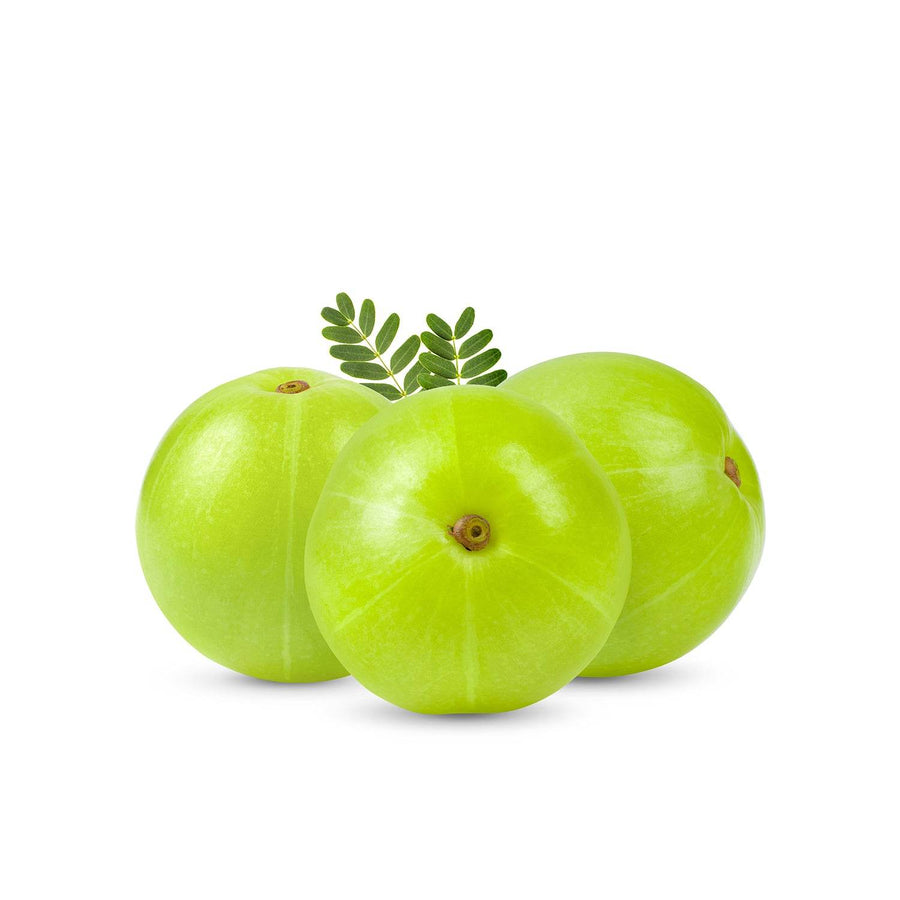
Amla is the fruit of the Indian gooseberry tree. The fruit is round, pale green to yellow-green, with six faint vertical lines and a hard stone in the centre. It tastes sharply sour and astringent, with a slight sweetness that follows.
In Karnataka it is called nellikayi or nellikai. Fresh amla is a winter fruit in India, so outside the season it is mostly used as powder, pickle or murabba.
Fresh amla or amla powder?
Fresh amla: for eating with salt, juicing, pickling, chutney, nellikayi chitranna and murabba. Buy it in season and use it within the week, or preserve it.
Amla powder: dried amla ground to a fine powder. It keeps for months and is stirred into water, buttermilk or chutney powders when fresh fruit is not available.
How to choose and store amla
Choose fruit that is firm, heavy for its size and evenly pale green, with smooth skin. Leave out fruit with soft patches, brown bruises or a wrinkled skin.
Keep fresh amla in the fridge in a breathable bag and use it within about a week. For longer keeping, cut it into segments and freeze them, sun-dry them, or make pickle or murabba.
Keep amla powder in an airtight jar in a cool, dry place and use a dry spoon.
Ways to use amla
Fresh: cut into segments around the stone and eat with a little salt and chilli powder.
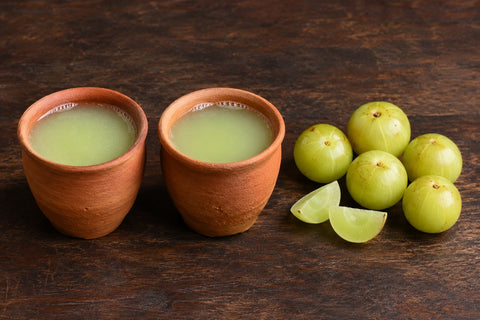
Juice: blend the segments with water and strain. Many people add a little ginger, honey or jaggery to balance the sourness.
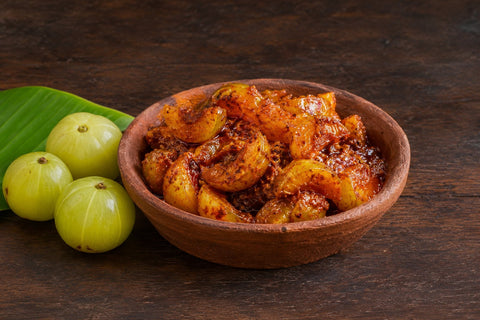
Pickle: nellikayi uppinakayi, made with salt, chilli, mustard and oil.
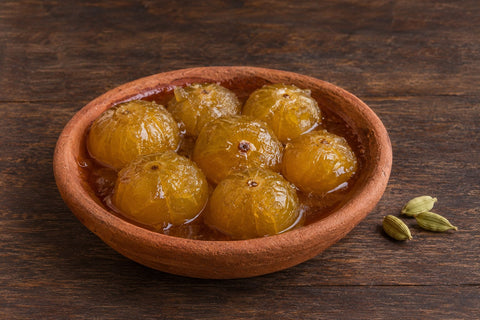
Murabba: whole amla cooked slowly in sugar or jaggery syrup.
Rice: nellikayi chitranna, where grated amla takes the place of lemon.
Chutney: ground with coconut, green chilli and coriander.
Where Organic Mandya's amla comes from
Organic Mandya's fresh amla is sourced directly from farms in Mandya. It is grown without chemical inputs and is lab-tested.
Nutrition per 100 g of fresh amla
| Energy | 58 kcal |
|---|---|
| Carbohydrates | 13.7 g |
| Dietary fibre | 3.4 g |
| Protein | 0.5 g |
| Fat | 0.1 g |
| Vitamin C | about 600 mg |
| Calcium | 50 mg |
| Iron | 1.2 mg |
Source: Organic Mandya's amla nutrition guide, which gives the full table and its sources
Recipes
Read more
Frequently asked questions
What is amla called in English and Kannada?
Amla is called Indian gooseberry in English and nellikayi or nellikai in Kannada. In Telugu it is usirikaya, in Tamil nellikkai and in Malayalam nellikka. Its botanical name is Phyllanthus emblica.
When is amla in season?
Fresh amla is a winter fruit in India. It typically reaches markets from around October and stays through the cooler months. Outside the season, amla powder, pickle and murabba are the usual ways to use it.
How do I store fresh amla?
Keep it in the fridge in a breathable bag and use it within about a week. To keep it longer, cut it into segments and freeze or sun-dry them, or turn it into pickle or murabba.
What does amla taste like?
Fresh amla is sharply sour and astringent, with a faint sweetness afterwards. That is why it is usually eaten with salt, pickled, sweetened as murabba, or diluted as juice.
What is the difference between fresh amla and amla powder?
Amla powder is fresh amla that has been dried and ground. It keeps for months and is convenient outside the season. Fresh amla is the one to use for juice, pickle, murabba and chitranna.
How do I cut amla?
Wash the fruit and cut along the faint vertical lines. The flesh comes away from the stone in segments. Discard the stone. For grating, hold the whole fruit and grate around the stone.


