


Champaka Agarbatti: Your Complete Guide to Benefits, Uses & Why Organic Is Different

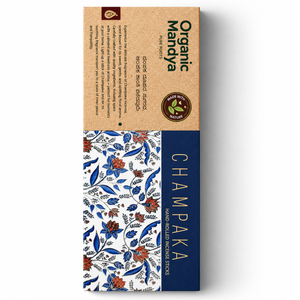
Champaka Agarbatti (Champak / Champa incense) captures the intoxicating fragrance of the golden champaka flower (Magnolia champaca) - one of India's most sacred temple flowers and the most sought-after natural floral fragrance in Indian incense tradition. The champaka flower produces a rich, sweet, heady, orange-blossom-like scent that has been associated with South Indian temples and devotional practice for over a thousand years. Organic Mandya's Champaka Agarbatti is handrolled with natural champaka flower extract and complementary floral ingredients on a bamboo core, delivering the authentic champaka temple experience without the synthetic champaka fragrances (linalool-methyl benzoate blends) that commercial agarbatti brands use.
What Is Champaka Agarbatti?
Champaka Agarbatti is a handrolled organic incense stick (agarbatti) made using the traditional masala method - natural aromatic ingredients (herbs, resins, flower extracts, spice powders) are ground, blended with natural gum binder (jigit gum from Lannea coromandelica), and handrolled onto a bamboo core. No charcoal coating, no DPG (dipropylene glycol) dipping, no synthetic fragrance oils, and no chemical combustion accelerants.
The masala method is the original Indian approach to agarbatti making - used for over 5,000 years in Vedic rituals and temple worship. It produces agarbatti where the fragrance comes entirely from the natural ingredients in the paste, not from synthetic chemistry applied to a charcoal stick. Each Champaka Agarbatti stick burns for approximately 25-35 minutes, producing light, fragrant herbal smoke with a floral, sweet, devotional character.
India's agarbatti market (over Rs 12,000 crore annually) is dominated by machine-dipped charcoal agarbatti using synthetic fragrance in DPG solvent. These commercial sticks release DPG vapour, synthetic musk compounds, and charcoal combustion particles when burned - all respiratory irritants. Organic Mandya's Champaka Agarbatti eliminates all synthetic chemical exposure while delivering genuine natural fragrance from real botanical ingredients.
How Is Organic Champaka Agarbatti Different from Commercial Agarbatti?
|
What We Are Comparing |
Organic Mandya Champaka Agarbatti |
Commercial Agarbatti |
|
Fragrance source |
Natural herbs, resins, flower/spice extracts |
Synthetic fragrance oil in DPG solvent |
|
Base coating |
Herb-resin paste (masala method) |
Charcoal powder + wood dust (black coating) |
|
Binding |
Natural jigit gum |
Chemical binders |
|
DPG |
Zero |
Primary fragrance carrier |
|
Making |
Handrolled by artisans |
Machine-dipped (industrial) |
|
Smoke |
Light grey-white; complex, layered aroma |
Dark grey-black; one-dimensional synthetic smell |
|
Ash |
Light, natural |
Heavy, black, charcoal-laden |
|
After-smell |
Pleasant herbal residue |
Chemical residue (often headache-inducing) |
|
Respiratory impact |
Traditional herbal fumigation |
DPG vapour + synthetic chemical exposure |
Why this matters daily: The average Indian household burns 2-3 agarbatti sticks per day. Over a year, that is 300-600 hours of smoke inhalation. Switching from synthetic to organic changes 300-600 hours of chemical exposure into traditional herbal fumigation - every single year.
What Are the Benefits of Champaka Agarbatti?
1. Authentic champaka flower fragrance for devotional practice. Champaka is one of the "pushpa panchaka" (five sacred flowers) in Hindu temple worship. The champaka flower's fragrance is believed to please Lord Vishnu and attract divine blessings. Organic Mandya's Champaka Agarbatti provides this sacred floral fragrance from natural sources rather than synthetic chemistry.
2. Sweet, uplifting floral notes for morning pooja. Unlike the grounding woody fragrance of Wood Spice (best for evening), Champaka's sweet, bright, uplifting floral profile is ideal for morning pooja, creating an energising and devotionally charged atmosphere to start the day.
3. Traditional South Indian temple atmosphere at home. The champaka fragrance is the signature scent of countless South Indian temples where champaka flowers are offered daily. Burning Champaka Agarbatti recreates this sacred atmosphere in your home pooja room.
4. All the benefits of organic handrolled agarbatti. Zero DPG, zero synthetic fragrance, zero charcoal base, antimicrobial herbal smoke, and traditional masala method production.
How Do I Use Champaka Agarbatti?
|
Setting |
Why Champaka |
Time |
|
Morning pooja |
Sweet, uplifting, devotional energy |
Morning (ideal) |
|
Vishnu/Krishna pooja |
Sacred flower of Lord Vishnu |
Any Vishnu pooja time |
|
Festival days |
Celebratory, auspicious floral fragrance |
Festivals and special occasions |
|
Pooja room daily |
Temple-like atmosphere at home |
Morning or evening |
|
Guest welcome |
Sweet, pleasant, universally liked fragrance |
Before guest arrival |
|
Weekend relaxation |
Uplifting without being stimulating |
Any time |
Safety: Use a proper agarbatti holder on a fireproof surface. Ensure room ventilation. Keep away from flammable materials. Never leave a burning agarbatti unattended. Each stick burns 25-35 minutes.
The Champaka Flower: India's Most Sacred Fragrance
The champaka flower (Magnolia champaca, formerly Michelia champaca) holds a position of extraordinary reverence in Indian culture. It is one of the "Ashta Pushpa" (eight auspicious flowers) in Hindu tradition. Lord Vishnu is specifically associated with champaka fragrance. In South Indian temples, champaka garlands are among the most prized offerings, often reserved for special festivals and deity adornments.
The champaka tree is a large evergreen that produces golden-orange flowers with an intensely sweet, complex fragrance that perfumers describe as having facets of orange blossom, ylang-ylang, sandalwood, and frangipani simultaneously. The fragrance is so distinctive and beloved that "champa" has become a generic fragrance category in Indian incense - unfortunately, most "champa" agarbatti in the market use entirely synthetic versions of this scent.
Organic Mandya's Champaka Agarbatti uses natural champaka flower extract and complementary floral ingredients to deliver the authentic champaka experience. The natural version has a depth, warmth, and complexity that synthetic champaka chemistry cannot replicate - like the difference between fresh jasmine flowers and jasmine-scented room spray.
The Complete Organic Mandya Agarbatti Range
|
Agarbatti |
Fragrance Profile |
Best For |
Personality |
|
7 Herbs |
Balanced Ayurvedic herbal blend |
Daily pooja; all-purpose |
The everyday essential |
|
Wood Spice |
Warm woody + spice (sandalwood, cinnamon) |
Evening meditation; winter |
The grounding anchor |
|
Champaka |
Sweet, rich floral (champaka flower) |
Morning pooja; devotional |
The temple flower |
|
Yaksha Sanchara |
Fresh, green, forest-like |
Morning; daytime freshness |
The nature walk |
|
Yaksha Chaitanya |
Deep, resinous, sacred |
Deep meditation; spiritual |
The inner journey |
|
Yaksha Mahotsava |
Rich, complex, celebratory |
Festivals; guests; occasions |
The grand celebration |
Building your organic agarbatti collection: Start with 7 Herbs for daily pooja (most versatile). Add Wood Spice for evening meditation and Champaka for morning devotion. Upgrade to the Yaksha trilogy for premium experiences - Sanchara for refreshing mornings, Chaitanya for deep practice, and Mahotsava for celebrations.
If you're exploring home essentials beyond a single product, it's worth understanding how agarbatti, sambrani cups, incense blends, and other natural home essentials compare. Read our Complete Home Essentials Guide to learn how each product is made, its traditional uses, benefits, and how to choose authentic, naturally crafted home essentials for your home and family.
Who Should Switch to Organic Agarbatti?
Every Indian household that burns agarbatti daily should switch to organic. The arithmetic is clear: daily burning x synthetic chemicals x 365 days/year x decades = cumulative respiratory and health burden that is entirely avoidable. Organic herbal agarbatti provides the same spiritual function, the same home fragrance, and the same cultural tradition - without the synthetic DPG, charcoal particles, and artificial fragrance chemicals.
The transition is effortless: same holder, same daily ritual, same number of sticks. Just different (genuinely natural) sticks. The fragrance improvement is immediately noticeable - complex, layered, and subtle instead of one-dimensional and sharp. The light-coloured ash (instead of black charcoal residue) is a daily visual reminder that what your family breathes is genuinely clean.
How Do I Know This Agarbatti Is Genuinely Organic and Handrolled?
Break a stick and examine: organic masala agarbatti has a brown-green, textured, herb-flecked coating. Commercial charcoal agarbatti has a smooth, uniform black coating. Smell unlit: organic has a mild natural herbal scent; commercial has a strong synthetic fragrance even unlit. Check the ash after burning: organic produces light whitish ash; charcoal produces heavy black ash. Quality tested at trust.organicmandya.com. FSSAI licence (#11219322000392).
Looking to build a healthier, chemical-free kitchen beyond this topic? Explore our comprehensive guide covering everything from cold-pressed oils and A2 dairy to millets, spices, dals, fruits, vegetables, natural sweeteners, snacks, home essentials, and more. It brings together practical buying advice, ingredient comparisons, and trusted information to help you make informed choices for every part of your kitchen.
Explore the Complete Chemical-Free Kitchen Guide
FAQs
Q1. What does champaka agarbatti smell like?
Sweet, rich, heady, floral - similar to orange blossom with deeper, warmer undertones. The signature fragrance of South Indian temples where champaka flowers are offered daily. Uplifting, devotional, and universally pleasant.
Q2. Is champaka agarbatti the same as "champa" agarbatti sold in markets?
Usually not. Most commercial "champa" agarbatti uses synthetic champaka fragrance (linalool + methyl benzoate blend in DPG). Organic Mandya's Champaka uses natural champaka flower extract. The scent depth and complexity are noticeably different.
Q3. When should I use champaka agarbatti vs wood spice?
Champaka for morning pooja (uplifting floral energy) and devotional practice. Wood Spice for evening meditation (grounding woody calm). Different times, different energies, both genuine.
Q4. How many sticks should I burn per day?
1-2 sticks per day is typical (morning and/or evening pooja). Each burns 25-35 minutes. Ensure ventilation during and after. Even organic herbal smoke is still smoke - good ventilation is always recommended.
Q5. Are organic agarbatti sticks more expensive than regular?
Yes - approximately 2-3x the price of commercial sticks. The cost reflects real herbs and resins (vs cheap charcoal + synthetic fragrance), handrolling by artisans (vs machine dipping), and organic ingredient sourcing. At Rs 3-5 per stick for 25-35 minutes of genuine herbal fragrance, the premium is modest compared to the synthetic chemical exposure it eliminates.


