


Little Millet Idly/Dosa Batter: Complete Organic Guide | Types, Benefits & Uses

Introduction
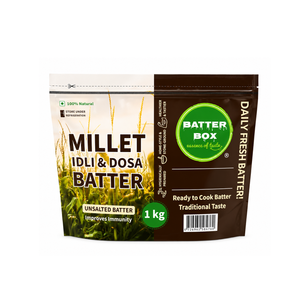
Little millet (saame) idli/dosa batter brings the highest-fibre millet into your daily breakfast rotation. Little millet's exceptional fibre content (~7.7g/100g) creates the most satiating idli/dosa you can eat - keeping you full longer than rice-based versions and providing a gentler blood sugar response. The cooling thermal nature of little millet makes this batter especially suitable for summer breakfast, when heavier grains feel inappropriate. Organic Mandya's organic little millet batter is naturally fermented with organic little millet flour and organic urad dal, producing soft idlis and crispy dosas with a delicate, slightly sweet millet flavour.
What Is Little Millet Idli/Dosa Batter?
Little Millet Idli/Dosa Batter is a naturally fermented batter made with organic millet flour replacing the traditional rice component, combined with organic urad dal for protein and binding. The fermentation process is identical to regular idli/dosa batter - wild yeasts and lactic acid bacteria (Leuconostoc mesenteroides, Lactobacillus) ferment the mixture over 8-12 hours, producing CO2 (for fluffiness), lactic acid (for tangy flavour and preservation), and B vitamins (synthesised by bacteria).
The millet substitution is the nutritional upgrade: where rice provides primarily starch with minimal fibre and minerals, millet provides significantly more protein, fibre, iron, calcium (in ragi's case), and a lower glycaemic response. The fermentation works equally well with millet flour, producing soft idlis and crispy dosas that are visually similar to rice versions but nutritionally superior.
Organic Mandya's little millet idli/dosa batter uses certified organic millet flour and certified organic urad dal, naturally fermented without preservatives, baking soda, or artificial additives. Delivered fresh within 24-48 hours.
How Is Organic Little Millet Idli/Dosa Batter Different from Regular Rice Batter?
|
What We Are Comparing |
Organic Little Millet Idli/Dosa Batter |
Regular Rice Idli/Dosa Batter |
|
Primary flour |
Organic millet (higher fibre, protein, minerals) |
Rice (primarily starch) |
|
Fibre |
Significantly higher (millet base) |
Low (~0.2g/100g in rice) |
|
Calcium |
Higher (especially ragi: 344mg/100g) |
Low (~10mg/100g in rice) |
|
Iron |
Higher (millet base) |
Low (~0.7mg/100g in rice) |
|
GI |
Lower (millet's complex starch) |
Higher (~70-80 for rice) |
|
Gluten |
Zero (millets are gluten-free) |
Zero (rice is gluten-free) |
|
Fermentation |
Natural (zero preservatives) |
May contain preservatives + baking soda |
|
Probiotic activity |
Active (living bacteria) |
Reduced if preserved |
|
Certifications |
NPOP + FSSAI |
FSSAI only |
What Are the Benefits of Organic Little Millet Idli/Dosa Batter?
1. Millet nutrition in familiar idli/dosa format. No new recipes to learn. No family resistance to overcome. Same idli moulds, same dosa tawa, same sambar and chutney. Just dramatically better nutrition from the millet flour base.
2. Higher fibre for blood sugar management. Millet-based idli/dosa produces a lower blood sugar spike than rice-based versions. For diabetic and pre-diabetic families, this is the easiest breakfast upgrade for glycaemic control.
3. Natural fermentation probiotics (zero preservatives). Active Lactobacillus and Leuconostoc bacteria provide genuine gut health benefits. No preservatives to kill the beneficial bacteria.
4. Organic millet + organic urad dal = zero pesticide exposure. For a food consumed 5-7 times per week, organic certification eliminates significant cumulative pesticide exposure.
5. Natural fermentation leavening (zero baking soda). CO2 from bacterial fermentation provides soft, fluffy idlis without the alkaline taste, sodium load, and B vitamin destruction of baking soda.
6. B vitamin enrichment from fermentation. Lactic acid bacteria synthesise B12, folate, and riboflavin during fermentation - vitamins that the raw ingredients alone do not provide in significant quantities.
7. Easier digestibility than unfermented millet preparations. Fermentation pre-digests starches and proteins, reducing anti-nutritional factors and making the millet more bioavailable. Fermented millet is gentler on digestion than millet roti or millet rice.
How Do I Use Little Millet Idli/Dosa Batter?
|
Recipe |
How |
Tips |
|
Millet idli |
Pour into greased idli moulds; steam 12-14 min |
Slightly longer steam than rice idli; check doneness |
|
Millet dosa |
Ladle on hot tawa; spread thin; cook until crispy |
Spread slightly thicker than rice dosa; millet batter is denser |
|
Millet uttapam |
Pour thick on tawa; top with vegetables; cook covered |
|
|
Millet paniyaram |
Pour into paniyaram pan; cook until golden |
Add chopped vegetables to batter for variety |
|
Millet set dosa |
Pour without spreading; cook soft |
Thick, spongy, pairs well with coconut chutney |
Storage: Refrigerate immediately. Use within 2-3 days. Day 1 for softest idlis, day 2-3 for tangiest dosas. Do not freeze (kills probiotic bacteria).
Flavour note: Millet idli/dosa has a slightly different flavour from rice - more earthy, nutty, and wholesome. Most families adapt within 2-3 uses. Children often prefer the millet version once they try it because the flavour is more interesting than plain rice.
Who Should Try Little Millet Idli/Dosa Batter?
|
If You Are... |
Should You Try? |
Why |
|
Wanting millet nutrition without recipe changes |
Yes - simplest millet adoption |
Same breakfast routine; just better batter |
|
Diabetic / pre-diabetic |
Yes |
Lower GI millet base; high fibre |
|
Wanting calcium from breakfast (ragi) |
Yes (ragi batter) |
344mg calcium/100g ragi flour |
|
Wanting high-fibre breakfast |
Yes |
Significantly more fibre than rice batter |
|
Child (6+ months) |
Yes - excellent first food |
Fermented millet idli is gentle and nutritious |
|
Celiac / gluten-sensitive |
Yes |
Millets are naturally gluten-free |
|
Having digestive sensitivity |
Yes |
Fermentation pre-digests; easier than unfermented millet |
Want to Explore More Organic Ready-to-Cook Products?
Discover our Complete Organic Ready-to-Cook Guide to explore preservative-free, traditionally prepared ready-to-cook foods made with certified organic ingredients for convenient, wholesome everyday meals.
How Do I Know This Is Genuinely Organic?
NPOP certification, FSSAI licence (#11219322000392), lab reports at trust.organicmandya.com. The freshness test: organic millet batter has a 2-3 day refrigerated shelf life (proof of zero preservatives). The fermentation test: properly fermented batter has a mild, pleasant tang and visible tiny bubbles on the surface. If your batter has no tang and no bubbles, it was not properly fermented (likely baking-soda leavened).
Looking to build a healthier, chemical-free kitchen beyond this topic?
Explore our comprehensive guide covering everything from cold-pressed oils and A2 dairy to millets, spices, dals, fruits, vegetables, natural sweeteners, snacks, home essentials, and more. It brings together practical buying advice, ingredient comparisons, and trusted information to help you make informed choices for every part of your kitchen.
Explore the Complete Chemical-Free Kitchen Guide
Little millet batter is the summer breakfast solution for health-conscious South Indian families.
The cooling millet base, high fibre for satiety, and familiar idli/dosa format create a breakfast that is nutritionally superior to rice-based versions while being seasonally appropriate for hot weather. Combined with ragi batter for cooler months, you have a year-round millet breakfast rotation.
Little millet batter for weight management: The exceptional fibre in little millet creates stronger satiety signals than rice batter. In practical terms, most people eat 2-3 little millet idlis to feel as full as 3-4 rice idlis. This natural portion reduction, repeated across hundreds of breakfasts per year, contributes meaningfully to weight management without any conscious calorie counting or willpower expenditure. The millet does the calorie reduction for you through fibre-driven satiety.
FAQs
Q1. Can I make both idli and dosa from millet batter?
Yes - same batter, different technique. Steam for idli, spread thin on tawa for dosa. Millet batter is slightly denser than rice batter, so spread dosa a bit thicker and steam idli 1-2 minutes longer.
Q2. Does millet batter taste different from rice batter?
Slightly - more earthy and nutty. Most people adapt within 2-3 uses and many prefer the millet version's more complex flavour. The accompaniments (sambar, chutney) taste the same.
Q3. How long does millet batter last?
2-3 days refrigerated (zero preservatives). Use day 1 for softest idlis, day 2-3 for dosas. Do not freeze.
Q4. Is millet batter good for babies?
Excellent - fermented millet idli is one of the best first foods (6+ months). Soft, easy to digest, probiotic, and rich in calcium (ragi) or fibre (little millet). Mash or break into small pieces. The fibre in little millet supports healthy gut development in infants.
The summer breakfast strategy: Little millet batter for summer months (cooling grain), ragi batter for winter months (neutral-to-warming), and regular rice batter as an occasional treat. This seasonal rotation follows traditional South Indian dietary wisdom while providing varied millet nutrition throughout the year. Organic Mandya offers all three batters, making seasonal rotation effortless. Order the appropriate seasonal batter in your weekly delivery and your family's breakfast is both traditionally aligned and nutritionally optimised.
Q5. Can I mix millet batter with regular rice batter?
Yes - mixing 50:50 with rice batter is a good transitional strategy for families new to millet idli/dosa. Gradually increase the millet proportion as your family adapts.


