


Cold-Pressed Oils
Cold-pressed oil is made by slowly crushing seeds or nuts in a press, without added heat or chemical solvents, and then filtering the oil instead of refining it. This page explains the terms, which oil suits which kind of cooking, and how to choose and store unrefined oils.
Other names
- English
- Cold-pressed oil, wood-pressed oil
- Hindi
- कच्ची घानी (Kachi ghani)
- Kannada
- ಗಾಣದ ಎಣ್ಣೆ (Gaanada enne)
- Tamil
- செக்கு எண்ணெய் (Chekku ennai)
- Telugu
- గానుగ నూనె (Ganuga nune)
Buy from Organic Mandya


What is cold-pressed oil?
Cold-pressed oil is extracted by pressing seeds or nuts slowly in a mechanical press. No outside heat is applied and no chemical solvent is used. The oil is then left to settle and is filtered.
Refined oil goes through further steps after extraction, such as bleaching and deodorising, which give it a pale colour and a neutral smell. Cold-pressed oil skips those steps, so it keeps the colour, aroma and taste of the seed it came from.
Cold-pressed, wood-pressed, kachi ghani and chekku
These words describe the same family of oils. Kachi ghani is the Hindi term, chekku the Tamil one, and gaana or ganuga the Kannada and Telugu ones. All refer to oil pressed in a traditional slow press.
Wood-pressed means the press itself is made of wood. Unrefined means the oil has not been bleached or deodorised after pressing.
Which oil for which cooking?
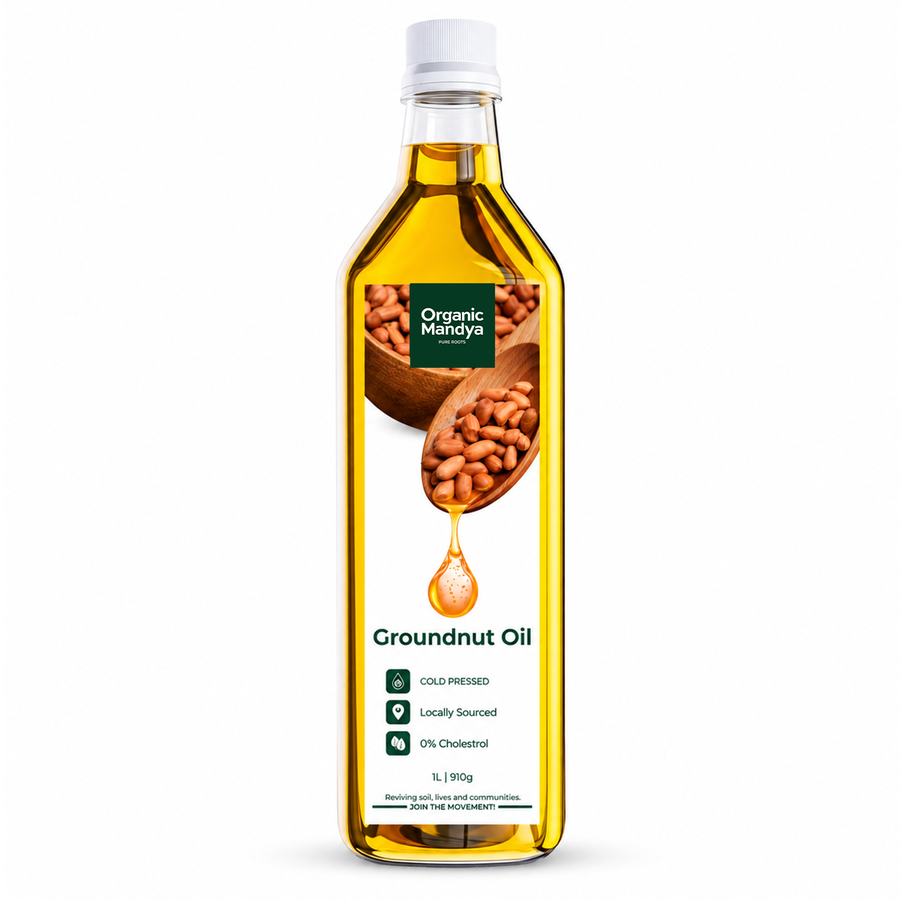
Groundnut oil (kadalekai enne): the everyday oil of Karnataka kitchens, used for tempering, sautéing and frying. It has a mild nutty taste.
Sunflower oil: light in taste, for everyday cooking where you do not want the oil to be noticed.
Coconut oil: for coastal Karnataka and Kerala dishes, dosa, and sweets. It turns solid in cool weather and melts again when warmed.
Sesame oil (ellenne, til oil, gingelly oil): for tempering, pickles, chutney powders and rice dishes such as puliyogare.
Safflower oil (kusuma or kardi oil): mild in taste, used for everyday cooking in North Karnataka and Maharashtra.
Mustard oil (sasive enne, sarson ka tel): pungent, used for pickles and for North and East Indian cooking.
Extra virgin olive oil: for salads, dressings and gentle cooking.
Unrefined oils carry more flavour than refined ones. Heat them gently and avoid letting the oil smoke.
How to choose and store cold-pressed oil
A cold-pressed oil should smell and taste of its seed, and its colour is deeper than that of refined oil. A little fine sediment at the bottom of the bottle is normal.
Store the oil in a cool, dark place with the cap closed, away from the stove and from sunlight. Use a dry ladle.
Buy a size you will finish within a couple of months of opening, and check the best-before date on the pack.
How Organic Mandya's oils are made
Organic Mandya's groundnut, coconut, sesame, sunflower, safflower and mustard oils are cold-pressed: the seeds are pressed slowly without added heat, and the oil is filtered, not refined.
The oil contains no artificial additives, preservatives, bleaching agents or chemical solvents, and each batch goes through quality checks.
Recipes


Read more
- What is wood-pressed oil?
- Kachi ghani in English
- What cold-pressed coconut oil means
- What is virgin coconut oil?
- Cold-pressed groundnut oil guide
- Black sesame oil guide
- Safflower (kusuma) oil guide
- Mustard oil and sunflower oil compared
- Cold-pressed castor oil guide
- Buy cold-pressed oils from Organic Mandya
- Sesame oil guide
- Ghee guide
Frequently asked questions
What does cold-pressed oil mean?
It means the oil was extracted by pressing the seed or nut slowly, without added heat or chemical solvents, and was filtered instead of refined. The oil keeps the natural colour, smell and taste of the seed.
Is wood-pressed oil the same as cold-pressed oil?
Wood-pressed oil is cold-pressed oil made in a wooden press. Kachi ghani, chekku and ganuga are regional names for the same traditional slow-pressing method.
What is kusuma oil in English?
Kusuma oil is safflower oil. It is also called kardi or kardai oil in Marathi and North Karnataka, and kusube enne in Kannada.
What is til oil called in English?
Til oil is sesame oil. In South India it is also called gingelly oil, ellenne in Kannada and nallennai in Tamil.
Why does coconut oil turn solid?
Coconut oil sets solid in cool weather, at roughly 24 degrees Celsius and below. This is normal. Stand the bottle in warm water for a few minutes and it turns liquid again.
Why is there sediment in my cold-pressed oil?
Cold-pressed oil is filtered, not refined, so very fine particles of the seed can settle at the bottom over time. This is normal for unrefined oil.
How should I store cold-pressed oil?
Keep it in a cool, dark place with the cap closed, away from the stove and direct sunlight, and use a dry ladle. Buy a size you will use within a couple of months of opening.


