


Dark Chocolate: Your Complete Guide to Benefits, Nutrition & Why Organic Is Different

Introduction
Dark chocolate is the rare indulgence backed by genuine science - a food where the pleasure and the health benefits are the same thing. The flavanol antioxidants in cocoa (the primary ingredient of dark chocolate) have been shown in clinical studies to improve blood vessel function, lower blood pressure by 2-3 mmHg, increase HDL cholesterol, enhance cognitive function, and boost mood through serotonin and endorphin pathways. But these benefits come with a critical condition: the chocolate must have high cocoa content (70%+), minimal sugar, and no alkali processing (which destroys up to 90% of flavanols). Most commercial "dark chocolate" fails all three tests - it is 50-60% sugar, uses alkali-processed cocoa, and contains vegetable fat substitutes instead of real cocoa butter. Organic Mandya's organic dark chocolate is made with certified organic cocoa (70%+ cocoa content), organic jaggery or coconut sugar (not refined white sugar), real cocoa butter (no vegetable fat substitutes), and no artificial emulsifiers or flavours. When the cocoa is genuine, the flavanols are real, and the sweetener is clean, dark chocolate becomes what it was always meant to be: functional food disguised as dessert.
What Is Organic Dark Chocolate?
Dark chocolate is chocolate made with a high percentage of cocoa solids (cocoa mass + cocoa butter) and minimal sugar, without the milk solids that define milk chocolate. The "darkness" refers to cocoa percentage: 70% dark chocolate means 70% of the bar is cocoa (mass + butter) and the remaining 30% is sweetener and other ingredients.
The health-active compounds in dark chocolate are flavanols - a subclass of flavonoid antioxidants concentrated in cocoa beans. Flavanols (epicatechin, catechin, procyanidins) are responsible for cocoa's bitter taste AND its health benefits. Higher cocoa percentage means more flavanols, more bitterness, and more health benefits.
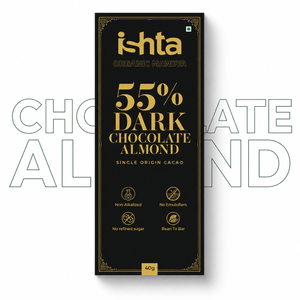
Organic Mandya's dark chocolate uses certified organic cocoa beans, processed without alkali treatment (Dutch processing), and sweetened with organic jaggery or coconut sugar instead of refined white sugar. The cocoa butter is real (not replaced with cheaper palm oil or vegetable fat), and no artificial lecithin emulsifiers or vanillin flavouring is added.
How Is Organic Dark Chocolate Different from Commercial Dark Chocolate?
|
What We Are Comparing |
Organic Mandya Dark Chocolate |
Commercial "Dark" Chocolate |
|
Cocoa content |
70%+ (genuine dark) |
Often 50-60% (more sugar than cocoa) |
|
Cocoa processing |
No alkali treatment (flavanols preserved) |
Dutch-processed (alkali destroys 60-90% of flavanols) |
|
Sweetener |
Organic jaggery / coconut sugar |
Refined white sugar |
|
Cocoa butter |
Real cocoa butter |
May use vegetable fat substitutes (CBE/CBS) |
|
Emulsifier |
Natural or none |
Synthetic soy lecithin |
|
Vanilla |
Natural (if used) |
Synthetic vanillin |
|
Cocoa farming |
Certified organic; fair trade practices |
Conventional; child labour concerns in some origins |
|
Flavanol content |
High (non-alkali processed) |
Low (alkali processing destroys them) |
|
Certifications |
NPOP + FSSAI |
FSSAI only |
The alkali processing problem: Most commercial cocoa is Dutch-processed (treated with alkali to reduce bitterness and darken colour). This destroys 60-90% of the flavanols that give chocolate its health benefits. Non-alkali processed cocoa retains these flavanols but is slightly more bitter. Organic Mandya uses non-alkali processed cocoa, preserving the full flavanol spectrum.
What Are the Health Benefits of Dark Chocolate (70%+)?
1. Flavanol antioxidants improve blood vessel function. Cocoa flavanols (epicatechin) stimulate nitric oxide production in blood vessel walls, causing vasodilation (relaxation of blood vessels). This improves blood flow and reduces blood pressure by 2-3 mmHg in clinical studies. The effect is measurable within 2 hours of consumption.
2. Blood pressure reduction (2-3 mmHg). Meta-analyses of randomised controlled trials show regular dark chocolate consumption (20-30g/day) reduces systolic blood pressure by 2-3 mmHg. While modest, this reduction at a population level translates to significant cardiovascular risk reduction.
3. HDL cholesterol increase and LDL oxidation reduction. Dark chocolate consumption increases HDL (good) cholesterol and reduces the oxidation of LDL cholesterol. Oxidised LDL is the form that causes arterial plaque - reducing LDL oxidation is protective even without lowering total LDL.
4. Mood enhancement (serotonin + endorphin + theobromine). Dark chocolate stimulates serotonin production (mood stabilisation), triggers endorphin release (pleasure response), and contains theobromine (a mild stimulant related to caffeine that provides gentle alertness without the jitters). This triple pathway makes dark chocolate a genuine mood food.
5. Cognitive function enhancement. Flavanol-rich cocoa improves cerebral blood flow, enhancing memory, attention, and processing speed in clinical studies. Regular consumption (over weeks) shows cumulative cognitive benefits, particularly in older adults.
6. Rich in minerals (iron, magnesium, copper, manganese). A 30g serving of 70%+ dark chocolate provides approximately 3.4mg iron (19% RDA), 64mg magnesium (16% RDA), 0.5mg copper (25% RDA), and 0.6mg manganese (26% RDA). Dark chocolate is one of the richest food sources of copper and manganese.
7. Prebiotic effect on gut microbiome. Cocoa flavanols are metabolised by beneficial gut bacteria (Bifidobacteria, Lactobacillus), which ferment them into absorbable anti-inflammatory compounds. In this sense, dark chocolate acts as a prebiotic - feeding the gut bacteria that support immune and digestive health.
What Is Inside Organic Dark Chocolate? (Nutrition per 100g, 70% cocoa)
|
Nutrient |
Per 100g |
Per 30g (1 serving) |
What It Does |
|
Calories |
~580 kcal |
~174 kcal |
Moderate portions recommended |
|
Cocoa flavanols |
~150-300 mg |
~45-90 mg |
Cardiovascular; cognitive; antioxidant |
|
Theobromine |
~800 mg |
~240 mg |
Gentle stimulant; mood; alertness |
|
Iron |
~11.3 mg |
~3.4 mg |
19% of RDA per serving |
|
Magnesium |
~213 mg |
~64 mg |
16% of RDA; muscle; nerve |
|
Copper |
~1.7 mg |
~0.5 mg |
25% of RDA |
|
Fat (cocoa butter) |
~42 g |
~12.6 g |
Stearic acid (neutral cholesterol effect) |
|
Fibre |
~11 g |
~3.3 g |
Gut health |
|
Sugar (organic jaggery/coconut sugar) |
~24 g |
~7.2 g |
Less than commercial (~40-50g/100g) |
How Do I Use Dark Chocolate?
|
Use |
How |
Amount |
|
Daily square (health dose) |
1-2 squares (20-30g) after lunch or as afternoon snack |
20-30g/day |
|
Hot chocolate |
Melt dark chocolate in warm A2 milk; add cinnamon |
20g chocolate + 200ml milk |
|
Trail mix |
Break into pieces; mix with almonds, walnuts, raisins |
20g chocolate + 30g nuts |
|
Fruit dip |
Melt and dip strawberries, banana slices, orange segments |
30g chocolate |
|
Oatmeal topping |
Grate over morning oatmeal with banana |
10g grated |
|
Baking |
Use in brownies, cookies, cakes (replace commercial chocolate) |
As recipe |
The daily dose: 20-30g per day (approximately 2-3 small squares) provides the flavanol dose used in clinical studies showing cardiovascular and cognitive benefits. More is not better - beyond 30g/day, the caloric and sugar cost outweighs additional benefits. Think of dark chocolate as a daily functional food, not a binge indulgence.
Who Should Try Organic Dark Chocolate?
|
If You Are... |
Should You Try? |
Why |
|
Wanting cardiovascular support |
Yes (20-30g/day) |
Flavanols improve blood vessel function; reduce BP 2-3 mmHg |
|
Wanting mood enhancement |
Yes |
Serotonin + endorphin + theobromine triple pathway |
|
Coffee-sensitive but wanting gentle alertness |
Yes |
Theobromine provides mild stimulation without caffeine jitters |
|
Diabetic |
In moderation (70%+ only; check sugar) |
High cocoa = lower sugar; still contains some; count in daily allowance |
|
Child (3+ years) |
Small amounts (10-15g) |
Too much theobromine for young children; moderate portions |
|
Pregnant |
Moderate amounts safe |
Some studies show flavanols benefit placental blood flow |
|
Migraine-prone |
Test individually |
Theobromine/tyramine in chocolate triggers migraines in some people |
|
Allergic to cocoa |
Avoid |
True cocoa allergy exists (rare) |
If you're exploring traditional sweets beyond a single product, it's worth understanding how dark chocolate, milk chocolate, hot chocolate, almond chocolate, cranberry chocolate, honey blends, peanut butter, coconut jam, and other wholesome sweets compare. Read our Complete Sweets Guide to learn how each product is made, its nutritional benefits, everyday uses, and how to choose authentic, naturally crafted sweets for your family.
How Do I Know This Dark Chocolate Is Genuinely Premium?
NPOP certification, FSSAI licence (#11219322000392). Check the ingredient list: cocoa mass, cocoa butter, organic sweetener (jaggery/coconut sugar). NOT: sugar, vegetable fat, cocoa powder, soy lecithin, artificial vanillin. The first ingredient should be cocoa (not sugar). Genuine 70%+ dark chocolate snaps cleanly when broken (not bendy), melts on the tongue (real cocoa butter melts at body temperature; vegetable fat substitutes do not), and has a complex bitter-sweet taste (not just sweet).
Looking to build a healthier, chemical-free kitchen beyond this topic? Explore our comprehensive guide covering everything from cold-pressed oils and A2 dairy to millets, spices, dals, fruits, vegetables, natural sweeteners, snacks, home essentials, and more. It brings together practical buying advice, ingredient comparisons, and trusted information to help you make informed choices for every part of your kitchen.
Explore the Complete Chemical-Free Kitchen Guide


