


Pearl Barley: Your Complete Guide to Benefits, Nutrition & Uses

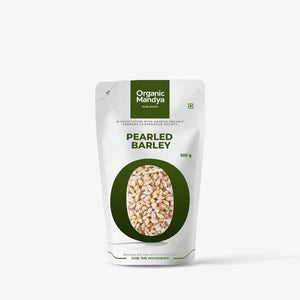
Pearl barley (jau) is one of the world's oldest cultivated grains and one of the few foods that naturally contains beta-glucan - a soluble fibre that has been clinically proven to lower LDL cholesterol by 5-10% at doses of 3g/day (FDA-approved health claim in the US, EFSA-approved in Europe). At 12.5 g protein, ~15-17 g fibre (including ~5 g beta-glucan), and a low glycaemic index, pearl barley is the heart-health grain - the one grain with a regulatory-approved claim for cholesterol reduction. Organic Mandya's organic pearl barley is sourced from certified organic farms, minimally processed to retain the fibre-rich layers, and lab-tested per batch.
What Is Pearl Barley?
Pearl Barley is one of India's traditional grains - cultivated for thousands of years before rice and wheat monoculture replaced millet diversity across Indian agriculture. Millets are small-seeded grasses that grow with minimal water, no synthetic inputs, and remarkable resilience in poor soils. The Indian government declared 2023 as the International Year of Millets (IYoM) to revive these climate-smart, nutrient-dense grains.
Organic Mandya's organic pearl barley is sourced from NPOP-certified organic farms, unpolished (retaining the fibre-rich bran layer), and lab-tested for pesticide residues. The grain is available as whole millet and as flour for versatile cooking applications.
How Is Organic Pearl Barley Different from Regular?
|
What We Are Comparing |
Organic Mandya |
Regular Market |
|
Farming |
Certified organic (NPOP); zero pesticides |
Conventional; pesticides possible |
|
Processing |
Unpolished (bran intact; full fibre + minerals) |
Often polished (bran removed) |
|
Fibre |
Full (bran layer retained) |
Reduced if polished |
|
Minerals |
Full iron, calcium, zinc (concentrated in bran) |
Lower if polished |
|
Colour |
Natural with bran specks |
Uniform if polished |
|
Certifications |
NPOP + FSSAI |
FSSAI only |
|
Lab reports |
trust.organicmandya.com |
Not published |
What Are the Health Benefits of Pearl Barley?
1. Beta-glucan - the only fibre with an FDA-approved cholesterol-lowering claim. Pearl barley contains ~5g beta-glucan per 100g. At 3g/day (achieved by eating ~60g barley daily), beta-glucan reduces LDL cholesterol by 5-10%. This is the only dietary fibre with regulatory-approved heart health claims in both the US (FDA) and Europe (EFSA).
2. High total fibre (~15-17 g/100g) - among the highest of any grain. The combination of beta-glucan (soluble fibre) and cellulose/hemicellulose (insoluble fibre) provides dual benefit: cholesterol reduction + digestive health + sustained satiety.
3. Excellent protein content (12.5 g/100g). Higher protein than rice (6.8g), millets (7-12g), and comparable to wheat (11.8g). Barley protein includes all essential amino acids, though lysine is limiting.
4. Low glycaemic index for blood sugar management. The high beta-glucan content slows glucose absorption, creating one of the lowest glycaemic responses among grains. Clinical studies show barley consumption reduces post-meal blood sugar and insulin response.
5. Prebiotic fibre for gut microbiome. Beta-glucan is fermented by beneficial gut bacteria, producing short-chain fatty acids (especially butyrate) that support colon health, reduce inflammation, and strengthen the gut barrier.
6. Versatile cooking - soup, porridge, pulao, salad. Pearl barley has a chewy, slightly nutty texture that works beautifully in soups, stews, risotto-style preparations, salads, and porridge.
What Is Inside Pearl Barley? (Nutrition per 100g)
|
Nutrient |
Per 100g |
Rice (polished) |
Wheat |
What It Does |
|
Beta-glucan |
~5 g |
0 g |
0 g |
Cholesterol-lowering (FDA-approved) |
|
Total fibre |
~15-17 g |
0.2 g |
1.2 g |
75x more than rice |
|
Protein |
12.5 g |
6.8 g |
11.8 g |
Higher than both |
|
Iron |
3.6 mg |
0.7 mg |
4.9 mg |
Blood health |
|
Calories |
354 kcal |
345 kcal |
346 kcal |
Similar |
|
Gluten |
Present (hordein) |
Zero |
Present |
NOT celiac-safe |
Source: ICMR IFCTs, 2017; USDA nutrient database
How Do I Use Pearl Barley Every Day?
|
Preparation |
How |
Best For |
|
Barley soup |
Cook barley in vegetable/bone broth with vegetables |
Heart health; winter meal; comforting |
|
Barley porridge |
Boil in milk/water with jaggery, cinnamon |
Breakfast; cholesterol management |
|
Barley pulao |
Temper spices, add barley + water, cook like rice |
Rice alternative with beta-glucan |
|
Barley salad |
Cook, cool, toss with vegetables, olive oil, lemon |
Summer meal; Mediterranean style |
|
Barley water |
Boil barley in water, strain, add lemon/honey |
Traditional kidney health drink |
|
Multi-grain atta |
Blend barley flour with other grain flours |
Daily bread with heart-health fibre |
If you're exploring traditional grains beyond a single millet, it's worth understanding how ragi, jowar, bajra, foxtail millet, little millet, kodo millet, barnyard millet, browntop millet, proso millet, and other millets compare. Read our Complete Millets Guide to learn about the nutritional benefits of each millet, their cooking methods, everyday uses, and how to choose authentic, organically grown millets for your family's healthy meals.
Who Should Try Pearl Barley?
Every Indian family can benefit from adding millets to their diet. ICMR-NIN 2024 dietary guidelines explicitly recommend millet inclusion for all Indians. The optimal approach is millet rotation - different millets across different meals and days - to access the varied nutritional profiles each millet offers. Pearl Barley fits naturally into this rotation, providing unique benefits that other grains cannot match.
Store in an airtight container in a cool, dry place. Unpolished millets keep well for 6-12 months. Use within 2-3 months after grinding into flour for maximum freshness.
How Do I Know This Pearl Barley Is Really Organic?
NPOP certification, FSSAI licence (#11219322000392), batch-level lab reports at trust.organicmandya.com. Unpolished millet has visible bran texture and natural colour variation. Polished millet is uniformly smooth and pale. The bran layer is where most of the fibre, iron, and antioxidants reside - if it has been polished away, you are paying for empty calories.
Why Choose Organic Pearl Barley
Pearl barley occupies a unique nutritional niche that no millet can fill: the beta-glucan niche. While all millets are nutritious, none contain meaningful beta-glucan. If your primary health goal is cholesterol reduction, pearl barley is the grain you need. The clinical evidence is unusually strong: multiple randomised controlled trials, a Cochrane review, and regulatory approvals from both the US FDA and European EFSA confirm that 3g/day of barley beta-glucan reduces LDL cholesterol by 5-10%.
To put this in practical terms: a bowl of barley porridge (60g dry weight) for breakfast provides approximately 3g beta-glucan - the full therapeutic dose. Do this daily for 4-6 weeks and get your lipid panel tested. The LDL reduction is measurable and consistent.
Important note: unlike millets, barley is NOT gluten-free. It contains hordein (a gluten protein). Pearl barley is not suitable for celiac disease or true gluten sensitivity. For gluten-free alternatives with some similar benefits, combine ragi (calcium) + jowar (fibre + antioxidants).
The cholesterol protocol with pearl barley: For measurable LDL cholesterol reduction, the evidence-based approach is: eat 60g dry pearl barley daily (as porridge, soup, or pulao) for 6-8 weeks. This provides ~3g beta-glucan per day - the dose validated in clinical trials. Get a lipid panel before starting and after 6-8 weeks. Expected LDL reduction: 5-10%. This is one of the few dietary interventions with enough clinical evidence to earn regulatory health claims from both the US FDA and European EFSA.
Pearl barley vs oats for beta-glucan: Both contain beta-glucan, but pearl barley has ~5g/100g versus oats' ~4g/100g. Pearl barley also has higher total fibre and protein. Oats have the advantage of being more widely available and familiar. Both are excellent; pearl barley is slightly more potent per gram.
Looking to build a healthier, chemical-free kitchen beyond this topic? Explore our comprehensive guide covering everything from cold-pressed oils and A2 dairy to millets, spices, dals, fruits, vegetables, natural sweeteners, snacks, home essentials, and more. It brings together practical buying advice, ingredient comparisons, and trusted information to help you make informed choices for every part of your kitchen.
Explore the Complete Chemical-Free Kitchen Guide
FAQs
Q1. What are the benefits of pearl barley?
Beta-glucan fibre (FDA-approved cholesterol-lowering claim), ~15-17g total fibre, 12.5g protein, low GI, prebiotic effects for gut health, and versatile cooking. The only grain with a regulatory-approved heart health claim.
Q2. Does barley lower cholesterol?
Yes - 3g/day of beta-glucan (from ~60g barley) reduces LDL cholesterol by 5-10%. This is an FDA-approved health claim and an EFSA-approved claim. Pearl barley is one of the richest food sources of beta-glucan.
Q3. Is barley gluten-free?
No - barley contains hordein, a gluten protein. It is NOT safe for celiac disease or true gluten sensitivity. For gluten-free alternatives with similar benefits, try oats (also contain beta-glucan but are often contaminated with wheat) or combine ragi + jowar.
Q4. How do I cook pearl barley?
Rinse 1 cup pearl barley. Add 3 cups water. Bring to a boil. Reduce heat, cover, and simmer 25-30 minutes until tender but still slightly chewy. Drain excess water. Use in soups, salads, porridge, or as a rice substitute.
Q5. What is the difference between pearl barley and barley dalia?
Pearl barley is the whole grain with the outer hull removed (still retains most fibre). Barley dalia is broken/cracked barley (smaller pieces, cooks faster, similar nutrition). Both provide beta-glucan. Pearl barley has a chewier texture; dalia makes smoother porridge.


