


Pearl Millet (Bajra): Your Complete Guide to Benefits, Nutrition & Uses

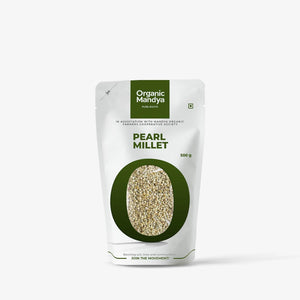
Pearl millet (bajra / kambu / sajje) is India's most resilient and nutritionally dense millet - a drought-resistant grain that thrives in the arid regions of Rajasthan, Gujarat, Maharashtra, and Karnataka where rice and wheat cannot survive. At 11.6 g protein, 8 g fibre, and 8 mg iron per 100 g (ICMR-NIN, 2024), bajra delivers superior nutrition to both rice (6.8 g protein, 0.2 g fibre) and wheat (11.8 g protein, 1.2 g fibre) while being naturally gluten-free. Bajra roti is a staple in Rajasthan and Gujarat. Bajra khichdi fuels farming communities across western India. Bajra flour makes nutritious rotis, bhakris, and porridge that have sustained Indian communities for over 4,000 years. Organic Mandya's organic pearl millet is sourced from certified organic farms, unpolished (retaining the fibre-rich bran layer), and lab-tested per batch. Here is why this ancient grain deserves a place in every modern Indian kitchen.
What Is Pearl Millet (Bajra)?
Pearl millet (Pennisetum glaucum) is the most widely grown millet species globally and India's fourth most important cereal crop after rice, wheat, and maize. Known as bajra in Hindi, kambu in Tamil, sajje in Kannada, and bajri in Gujarati, pearl millet has been cultivated in India for over 4,000 years - archaeological evidence from Rajasthan and Gujarat confirms its ancient domestication.
What makes bajra extraordinary is its ability to grow in extreme heat (up to 42 degrees C) and minimal rainfall (250-600 mm/year) - conditions where rice needs 1,200+ mm and wheat needs 450-650 mm. This drought resilience makes bajra both ecologically sustainable and nutritionally adapted to harsh environments. The grain itself is small, round, and grey-white in colour, with a nutty, slightly sweet flavour when cooked.
Bajra is classified as a "positive millet" by the Indian Institute of Millets Research (IIMR) - meaning it has a net alkaline effect on the body, unlike rice and wheat which are acid-forming. The high iron content (8 mg/100g) makes bajra particularly important for India's anaemia crisis (57% of women are anaemic per NFHS-5).
Organic Mandya's pearl millet is certified organic, unpolished (whole grain with bran intact), and stone-ground for flour.
How Is Organic Pearl Millet Different from Regular Pearl Millet?
|
What We Are Comparing |
Organic Mandya Bajra |
Regular Market Bajra |
|
Farming |
Certified organic (NPOP); zero pesticides |
Conventional; pesticides possible |
|
Processing |
Unpolished (bran intact; full fibre) |
Often polished (fibre reduced) |
|
Fibre |
~8 g/100g (full bran) |
Reduced if polished |
|
Iron |
~8 mg/100g (bran contains iron) |
Lower if polished |
|
Colour |
Natural grey-white with bran specks |
Uniform white if polished |
|
Certifications |
NPOP + FSSAI |
FSSAI only |
|
Lab reports |
trust.organicmandya.com |
Not published |
Why unpolished matters: Polishing removes the bran layer of the grain - the fibre-rich outer coating that contains most of the iron, B vitamins, and antioxidants. Unpolished bajra retains this nutrition. The difference between polished and unpolished millet is analogous to white rice vs brown rice - except the nutritional gap is even larger with millets because the bran layer is proportionally thicker.
What Are the Health Benefits of Pearl Millet (Bajra)?
1. High iron for anaemia prevention (8 mg/100g). India's anaemia crisis affects 57% of women (NFHS-5). Bajra provides 8 mg iron per 100g - significantly more than rice (0.7 mg) and wheat (4.9 mg). ICMR-NIN now recommends millet inclusion specifically to address iron deficiency. The iron in bajra is non-heme; consume with Vitamin C sources (lemon, tomato, amla) for better absorption.
2. High protein with superior amino acid profile (11.6 g/100g). Bajra provides more protein than rice (6.8g) and nearly matches wheat (11.8g) - while being gluten-free. The amino acid profile includes higher methionine and cysteine than most cereals, making it complementary to dal (which is limiting in these amino acids).
3. High fibre for digestive and glycaemic health (8 g/100g). Bajra's fibre content is 40x higher than polished rice (0.2g) and 6.7x higher than wheat (1.2g). This fibre slows glucose absorption (lower glycaemic response), feeds beneficial gut bacteria (prebiotic effect), and promotes regular bowel movements.
4. Naturally gluten-free - safe for celiac and gluten sensitivity. Pearl millet contains zero gluten proteins (gliadin/glutenin). It is a safe grain for celiac disease, gluten sensitivity, and anyone choosing to reduce gluten intake. Bajra flour makes excellent rotis and porridge for gluten-free households.
5. Low glycaemic index (~54-68 depending on preparation). Bajra has a lower GI than rice (~70-80) and wheat (~60-72). The combination of high fibre, complex carbohydrates, and protein creates a slow, sustained glucose release - ideal for diabetic and pre-diabetic management.
6. Rich in magnesium and zinc. Bajra provides ~137 mg magnesium and ~3.1 mg zinc per 100g. Magnesium supports 300+ enzymatic reactions including energy production, muscle function, and blood sugar regulation. Zinc supports immunity and wound healing.
7. Natural heat generation (thermogenic). Bajra is classified as a "warming" grain in traditional Indian dietary wisdom. Bajra roti is the staple winter food of Rajasthan and Gujarat precisely because it generates internal warmth. In summer, bajra is consumed in lighter preparations (porridge, khichdi) or reduced in favour of cooling millets (ragi, little millet).
What Is Inside Pearl Millet (Bajra)? (Nutrition per 100g, unpolished)
|
Nutrient |
Per 100g (unpolished) |
Rice (polished) |
Wheat |
What It Does |
|
Protein |
11.6 g |
6.8 g |
11.8 g |
Muscle; tissue repair; satiety |
|
Fibre |
8.0 g |
0.2 g |
1.2 g |
Gut health; blood sugar control |
|
Iron |
8.0 mg |
0.7 mg |
4.9 mg |
Blood health; anaemia prevention |
|
Calcium |
42 mg |
10 mg |
48 mg |
Bone health |
|
Magnesium |
137 mg |
25 mg |
138 mg |
Muscle; nerve; blood sugar |
|
Zinc |
3.1 mg |
1.1 mg |
2.7 mg |
Immunity; wound healing |
|
Calories |
361 kcal |
345 kcal |
346 kcal |
Energy (similar across grains) |
|
Glycaemic index |
~54-68 |
~70-80 |
~60-72 |
Lower = better blood sugar control |
|
Gluten |
Zero |
Zero |
Present |
Safe for celiac / gluten-free diets |
Source: ICMR IFCTs, 2017; ICMR-NIN, 2024
How Do I Use Pearl Millet (Bajra) Every Day?
|
Preparation |
How |
Best For |
|
Bajra roti / bhakri |
Knead bajra flour with warm water; roll thick; cook on tawa |
Winter staple; pairs with garlic chutney, sabzi |
|
Bajra khichdi |
Cook bajra with moong dal, ghee, cumin (Rajasthani style) |
Complete protein meal; comfort food |
|
Bajra porridge (raab) |
Boil bajra flour in buttermilk/water with jaggery |
Breakfast; new mothers; recovery food |
|
Bajra upma |
Coarse bajra rava cooked with vegetables |
Quick breakfast; diabetic-friendly |
|
Multi-grain atta blend |
Mix bajra flour with ragi, jowar, wheat (25% each) |
Daily rotis with millet nutrition |
|
Bajra dosa |
Ferment bajra flour with urad dal batter |
South Indian style; gluten-free dosa |
Winter vs summer use: Bajra is a warming grain. In Rajasthan and Gujarat, bajra roti is the primary winter staple (October-February) because it generates internal warmth. In summer, reduce bajra and increase cooling millets like ragi, little millet, or foxtail millet. This seasonal rotation follows traditional Indian dietary wisdom and ensures varied nutrition throughout the year.
Explore More About Organic Millets
Pearl Millet (Bajra) is just one of the many nutrient-rich millets that can be part of a balanced, wholesome diet. Each millet offers unique nutritional benefits—from the protein-rich foxtail millet to the fibre-packed little millet and the energy-boosting pearl millet. To understand the different types of millets, their health benefits, and how to include them in your everyday meals, Read the Complete Organic Millets Guide.
Who Should Try Pearl Millet (Bajra)? (And Who Should Be Careful?)
|
If You Are... |
Should You Try It? |
Why |
|
Anaemic or iron-deficient |
Yes - prioritise bajra |
8mg iron/100g; highest among common millets |
|
Diabetic / pre-diabetic |
Yes |
Low GI (~54-68); high fibre slows glucose absorption |
|
Wanting gluten-free grain alternatives |
Yes |
Zero gluten; excellent roti flour |
|
Living in cold climate / winter season |
Yes - traditional winter grain |
Thermogenic; generates internal warmth |
|
Wanting high-protein millet |
Yes |
11.6g protein - nearly matches wheat |
|
Having thyroid issues |
Consume in moderation |
Pearl millet contains goitrogens (like all millets); cooking reduces them significantly; consult doctor |
|
In hot summer months |
Moderate consumption |
Warming nature; rotate with cooling millets |
How Do I Know This Bajra Is Really Organic & Unpolished?
NPOP certification, FSSAI licence (#11219322000392), lab reports at trust.organicmandya.com. Unpolished bajra has visible bran specks, a slightly rough texture, and a natural grey-white colour. If the grain is perfectly smooth, uniformly white, and has no texture variation, it has likely been polished - and you have lost a significant portion of the fibre and iron you are paying for.
Why Pearl Millet Deserves a Comeback in Every Indian Kitchen
Bajra fed India's farming communities for 4,000 years before rice and wheat monoculture took over. In that replacement, India lost access to 8 mg iron per 100g (versus rice's 0.7 mg), 8g fibre (versus rice's 0.2g), and a naturally gluten-free, low-GI grain that thrives without irrigation.
The result is visible in national health data: 57% of Indian women are anaemic, Type 2 diabetes affects 101 million Indians, and gluten sensitivity is rising. Bajra addresses all three problems simultaneously. One grain, three solutions.
Organic Mandya's unpolished organic bajra makes this comeback simple: cook it as roti, khichdi, porridge, or blend it into multi-grain atta. The nutty, slightly sweet flavour is genuinely delicious. The nutrition is genuinely superior to rice and wheat. And the organic certification means zero pesticide residues on a grain your family eats daily.
Looking to build a healthier, chemical-free kitchen beyond this topic? Explore our comprehensive guide covering everything from cold-pressed oils and A2 dairy to millets, spices, dals, fruits, vegetables, natural sweeteners, snacks, home essentials, and more. It brings together practical buying advice, ingredient comparisons, and trusted information to help you make informed choices for every part of your kitchen.
Explore the Complete Chemical-Free Kitchen Guide
FAQs
Q1. What are the benefits of bajra (pearl millet)?
8 mg iron/100g (11x more than rice), 11.6g protein, 8g fibre, low GI (~54-68), naturally gluten-free, rich in magnesium and zinc. Bajra addresses anaemia, supports blood sugar management, and provides complete grain nutrition without gluten.
Q2. Is bajra good for diabetes?
Yes - low glycaemic index (~54-68 vs rice ~70-80), high fibre (8g/100g), and complex carbohydrates create slow, sustained glucose release. ICMR-NIN 2024 guidelines recommend millet inclusion for diabetic management.
Q3. Is bajra gluten-free?
Yes - pearl millet contains zero gluten proteins. Safe for celiac disease and gluten sensitivity. Bajra flour makes excellent gluten-free rotis and bhakris.
Q4. Can I eat bajra in summer?
In moderation. Bajra is thermogenic (warming). Traditional practice in Rajasthan and Gujarat is to eat bajra primarily in winter (October-February) and switch to cooling millets (ragi, little millet) in summer. This seasonal rotation is nutritionally sound.
Q5. How do I cook bajra roti?
Knead bajra flour with warm water (no wheat flour needed). Divide into balls. Flatten with hands or rolling pin (bajra dough is less elastic than wheat). Cook on a hot tawa with ghee. Serve hot with garlic chutney, white butter, and sabzi. Bajra roti is best eaten fresh - it hardens as it cools.
Q6. Is bajra better than rice?
Nutritionally: significantly. 11x more iron, 40x more fibre, higher protein, lower GI, and naturally gluten-free. Rice has the advantage of versatility and easier cooking. The ideal approach is to replace 2-3 rice meals per week with bajra or other millets.


