




Karnataka · Breakfast
Rice Rava Upma / Akki Tari Uppittu
ಅಕ್ಕಿ ತರಿ ಉಪ್ಪಿಟ್ಟು · Akki Tari Uppittu · Akki Rave Uppittu · Arisi Upma
Rice rava upma, or akki tari uppittu, is a savoury preparation of coarsely broken white rice cooked with a mustard-and-dal tempering. Roast the rice rava lightly, then cook it in measured hot water until the granules soften. Fresh coconut and coriander finish this simple Karnataka breakfast.
- vegetarian
- vegan
- gluten-free
Ingredients
- 200 g (about 1 cup)White rice upma rava Organic MandyaUse coarse upma rava, not wheat sooji or fine idli rava.
- 720 ml (3 cups)Drinking water600 ml for cooking and 120 ml measured reserve.
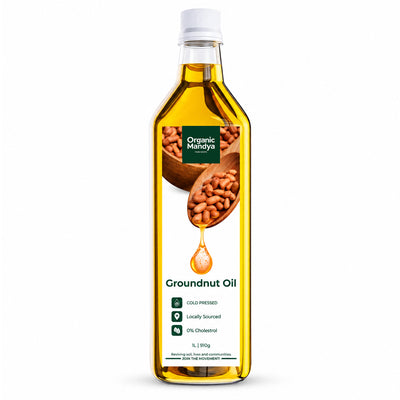
- 20 ml (4 tsp)Groundnut oil Organic Mandya
- 10 g (2 tsp)Chana dal Organic Mandya
- 5 g (1 tsp)Split urad dal Organic Mandya
- 2 g (about 1/2 tsp)Black mustard seeds Organic Mandya
- 6 g (2 small, slit)Green chilli Organic Mandya
- 2 g (1 sprig)Curry leaves Organic Mandya
- 50 g (about 1/2 cup)Fresh grated coconut Organic Mandya
- 8 g (2 tbsp, chopped)Coriander leaves Organic Mandya
- 4 g (about 3/4 tsp)Salt
Method
Roast the rice rava
Dry-roast the rice rava over medium-low heat for 4 minutes, stirring until lightly fragrant without deep colouring.
⏱ 4 minHeat the water
Bring 600 ml water to a boil in a separate covered pan over about 3 minutes, keeping the 120 ml reserve nearby.
⏱ 3 minPop the mustard
Heat the oil in a heavy pan over medium heat and fry the mustard for about 30 seconds, until it pops.
⏱ 30 secGolden the dals
Add the chana dal and urad dal and fry for about 90 seconds, until lightly golden.
⏱ 1 minAdd the aromatics
Fry the chilli and dry curry leaves for 15 seconds, then add the boiling water and salt carefully.
⏱ 15 secStir in the rava
Pour the roasted rava into the simmering water in a steady stream, stirring to prevent lumps.
⏱ 30 secCook until tender
Cover over low heat for 10–12 minutes, stirring once halfway; if a cooled granule remains hard and the pan is dry, add the reserve in 30 ml portions and continue until tender.
⏱ 11 minAdd the coconut
Fold in the coconut and coriander once the rice granules crush easily and no loose water remains.
Rest before serving
Leave covered off the heat for 5 minutes, then loosen gently and serve.
⏱ 5 min
Shop the ingredients
Added ✓ · View cart


Tips
- Choose rice rava labelled for upma, since idli rava can be a different grind.
- Add the water reserve by texture rather than automatically pouring it all in.
- Keep the flame low once the lid is on to avoid a scorched base.
- Do not judge doneness only by whether the water has disappeared.
Serving
Serve warm with coconut chutney or a small portion of curd. The main recipe is onion-free and is also suitable with a spoonful of chutney pudi served separately.
Serve with: Coconut Chutney, Shenga Chutney Pudi and Kesari Bath.
Storage
Cool within 1 hour and refrigerate in a covered container; use by the next day. Reheat once with a little water until steaming hot throughout.
Variations
- Add 75 g finely diced carrot to the boiling water before adding the rava, allowing a few extra minutes for it to soften.
- Replace half the groundnut oil with ghee for a dairy-containing variation.
Nutrition per serving
| Energy | 285 kcal |
|---|---|
| Protein | 5.0 g |
| Carbohydrates | 44.6 g |
| Fat | 9.5 g |
| Fibre | 2.5 g |
Approximate, calculated from raw ingredient quantities and divided by the stated servings; water and salt contribute no energy.
Questions people ask
Is rice rava the same as wheat sooji?
No. Rice rava is coarsely broken rice, while sooji is made from wheat. They absorb water differently and are not interchangeable without adjusting the method. This recipe uses the white rice upma rava specified in the ingredient list.
Can I use idli rava for this upma?
It may work, but its grind and processing can differ from upma rava, changing the texture and water requirement. Use the named upma product for the main method. If substituting, add water cautiously and check the centre of a cooled granule.
What water ratio should I use for rice rava upma?
Start with 600 ml water for 200 g rice rava, roughly 2 1/2 cups water to 1 cup rava. Keep another 120 ml available. Coarser or older granules may need the reserve; finish by checking tenderness rather than relying on volume alone.
Why is my rice rava upma sticky?
Very fine rava, excess water or vigorous stirring after the granules soften can make it sticky. Roast lightly, add water in measured amounts and use a gentle folding motion. Rest it covered off the heat before loosening and serving.
Can I make this upma without onion?
Yes. The main recipe already omits onion, using mustard, dals, chilli, curry leaves and coconut for flavour. Check that the dals turn lightly golden before adding water. Serve with a separate chutney rather than adding extra wet ingredients to the pan.
Photo: Organic Mandya · © Organic Mandya


