



Ridge Gourd in English, Telugu, Kannada & Tamil: Names, Nutrition & Uses

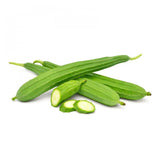


Ridge gourd is called beerakaya (బీరకాయ) in Telugu, heerekai or hirekai (ಹೀರೆಕಾಯಿ) in Kannada, peerkangai (பீர்க்கங்காய்) in Tamil and turai (तुरई) in Hindi. Its botanical name is Luffa acutangula, and in English it is also called angled luffa or Chinese okra.
It is the long, dark green gourd with sharp ridges running from end to end. Below you will find its name in 11 languages, how it differs from sponge gourd, its nutrition per 100 g from the Indian Food Composition Tables, and how to pick, cook and store it.
Buy fresh ridge gourd (beerakaya / heerekai) from Organic Mandya

Ridge gourd names in Indian languages
| Language | Name | Script | Notes |
|---|---|---|---|
| English | Ridge gourd; angled luffa | - | Also sold as ribbed gourd or Chinese okra |
| Telugu | Beerakaya | బీరకాయ | Beerakaya pappu is a home staple in Andhra and Telangana |
| Kannada | Heerekai, hirekai, heerekayi | ಹೀರೆಕಾಯಿ | Three spellings of one word |
| Tamil | Peerkangai | பீர்க்கங்காய் | Also spelt peerkankai |
| Hindi | Turai, torai | तुरई / तोरई | Used across North India |
| Malayalam | Peechinga | പീച്ചിങ്ങ | Kerala name |
| Marathi | Dodka | दोडका | Maharashtra name |
| Gujarati | Turiya | તુરિયા | Gujarat name |
| Bengali | Jhinge | ঝিঙে | Bengal name |
| Odia | Janhi | ଜହ୍ନି | Odisha name |
| Punjabi | Kali tori | ਕਾਲੀ ਤੋਰੀ | Punjab name |
| Botanical | Luffa acutangula | - | Gourd family (Cucurbitaceae) |
Why so many spellings? Heerekai, hirekai and heerekayi are all the Kannada word ಹೀರೆಕಾಯಿ written in English letters in different ways. The ending -kai or -kayi in Kannada, -kaya in Telugu and -kai in Tamil is the word for an unripe fruit cooked as a vegetable, which is why so many vegetable names in the south end the same way.
Ridge gourd vs sponge gourd
Two close cousins are sold side by side, and people often mix them up:
- Ridge gourd (Luffa acutangula) has sharp, raised ridges along its length and a slightly firmer flesh.
- Sponge gourd (Luffa aegyptiaca, also called Luffa cylindrica) is smooth, round in cross-section and softer. It is ghia torai in Hindi and tuppa heere in Kannada. When it is left on the vine to dry, its fibrous inside becomes the bath loofah.
Both are cooked when young and tender, and you can use them in the same dishes.
Ridge gourd nutrition per 100 g
Values per 100 g of edible portion, raw, from the Indian Food Composition Tables 2017 (ICMR-National Institute of Nutrition), entry "Ridge gourd".
| Nutrient | Per 100 g |
|---|---|
| Energy | 55 kJ (about 13 kcal) |
| Water | 95.0 g |
| Protein | 0.9 g |
| Fat | 0.1 g |
| Carbohydrate (available) | 1.7 g |
| Dietary fibre | 1.8 g |
| Calcium | 13.7 mg |
| Iron | 0.42 mg |
| Magnesium | 16.2 mg |
| Potassium | 118 mg |
| Vitamin C | 5.4 mg |
| Folate | 29 µg |
| Beta-carotene | 348 µg |
Source: Indian Food Composition Tables 2017, ICMR-NIN, Hyderabad.
What the numbers tell you: ridge gourd is 95 percent water and very low in calories, with close to 2 g of fibre per 100 g. That mild, watery flesh is exactly why it soaks up the flavour of dal, coconut and tempering so well. It also brings a little potassium, a mineral the body needs for normal nerve and muscle function.
How to pick a good ridge gourd
- Choose gourds that are firm, bright green and feel heavy for their size.
- Slimmer, younger gourds have tender ridges and soft seeds. Very large, light or hollow-feeling ones are over-mature and turn fibrous.
- Skip any that are yellowing, wrinkled, soft at the ends or limp.
- Taste a small raw piece before cooking. If it tastes bitter, throw the whole gourd away. An ICMR expert committee warned against drinking bitter bottle gourd juice, whose bitterness comes from natural compounds called cucurbitacins; the same caution is sensible for every gourd.
How ridge gourd is cooked across India
Young ridge gourd needs only its sharp ridges scraped off; older ones are peeled. In Karnataka, many cooks keep the peel to grind into a chutney.
| Region | Local name | Popular dishes |
|---|---|---|
| Karnataka | Heerekai | Heerekai chutney, heerekai sippe (peel) chutney, heerekai palya, heerekai dosa |
| Andhra Pradesh and Telangana | Beerakaya | Beerakaya pappu (with toor dal), beerakaya pachadi, beerakaya curry |
| Tamil Nadu | Peerkangai | Peerkangai kootu, peerkangai thogayal, peerkangai kadayal |
| North India | Turai | Turai ki sabzi |
Ridge gourd cooks in minutes, so add it towards the end and let it release its own water. For more gourds that cook the same way, read our guides to snake gourd, ivy gourd (tondekayi) and bitter gourd.
How to store ridge gourd
- Keep it unwashed in the vegetable drawer of the fridge and use it within three to four days.
- Wash and cut it only just before cooking; cut gourd goes soft and dark quickly.
- Ridge gourd is in markets most of the year, with the best supply in the monsoon months.
Our ridge gourd comes from our farmer network. Fresh vegetables are delivered only in Bengaluru, Mysuru and Hyderabad. For more on this vegetable, see the ridge gourd page in Know Your Food.
Cook ridge gourd at home

FAQs
Q1. What is beerakaya called in English?
Beerakaya (బీరకాయ) is called ridge gourd in English. Its botanical name is Luffa acutangula. The same vegetable is heerekai in Kannada, peerkangai in Tamil and turai in Hindi.
Q2. What is hirekai or heerekai in English?
Hirekai, heerekai and heerekayi are spellings of the Kannada word ಹೀರೆಕಾಯಿ, which means ridge gourd. It is the ridged green gourd used in heerekai chutney and palya.
Q3. What is peerkangai in English?
Peerkangai (பீர்க்கங்காய்) is the Tamil name for ridge gourd. In Tamil kitchens it goes into kootu, thogayal and kadayal.
Q4. Are ridge gourd and sponge gourd the same?
No, they are two different species of luffa. Ridge gourd has sharp ridges along its length; sponge gourd is smooth and softer. They cook in much the same way.
Q5. What nutrients does ridge gourd have?
Per 100 g, IFCT 2017 lists about 13 kcal, 95 g water, 1.8 g dietary fibre, 118 mg potassium and 5.4 mg vitamin C. Most of its weight is water.
Q6. Should I peel ridge gourd?
For young, tender gourds, just scrape off the sharp ridges. Peel older gourds, whose skin is tougher. The peel can be cooked separately into a chutney.
Q7. Why does my ridge gourd taste bitter?
Bitterness in gourds comes from natural compounds called cucurbitacins. Do not eat a gourd that tastes bitter; throw it away and use a fresh one.
About this article
Sources:
- Indian Food Composition Tables 2017, ICMR-National Institute of Nutrition, Hyderabad: nutrient values for "Ridge gourd" (food code D068) and its local names in Indian languages.
- ICMR Task Force, "Assessment of effects on health due to consumption of bitter bottle gourd juice", Indian Journal of Medical Research, 2012: cucurbitacins and the advice not to consume bitter gourd juice.
- flowersofindia.net: names of sponge gourd (Luffa aegyptiaca); Wikipedia, "Luffa": sponge gourd as the source of loofah sponges.
- Regional cooking sources: Sailu's Food (beerakaya), Hebbar's Kitchen Kannada (heerekai recipes), Tamil recipe sites for peerkangai thogayal and kadayal.


