


Kodo Millet In English: Names in English, Hindi & Indian Languages

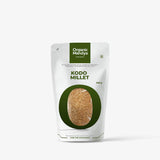
Kodo millet in English is called "Kodo Millet"; its botanical name is Paspalum scrobiculatum. In Hindi, it is Kodra (कोदरा), in Tamil Varagu (வரகு), in Kannada Harka (ಹರಕ), in Telugu Arikelu (అరికెలు), and in Marathi Kodra (कोद्रा). According to the ICMR Indian Food Composition Tables 2017, kodo millet provides 8.3 g protein, 9.0 g dietary fibre, 27 mg calcium, and 2.7 mg iron per 100 g, with a glycaemic index of approximately 52 and zero gluten. It is one of India's nine major millet species, cultivated for over 3,000 years across the Deccan Plateau, and classified as one of the five "positive millets" (Siri Dhanya) by Dr Khader Vali of Karnataka.
Kodo Millet: The Complete Name Map
|
Language |
Name |
Script |
Pronunciation |
|
English |
Kodo Millet |
- |
KOH-doh MIL-let |
|
Hindi |
Kodra / Kodon |
कोदरा / कोदों |
KOH-draa / KOH-don |
|
Kannada |
Harka |
ಹರಕ |
HAR-ka |
|
Tamil |
Varagu |
வரகு |
VA-ra-gu |
|
Telugu |
Arikelu / Arika |
అరికెలు |
A-ri-ke-lu |
|
Marathi |
Kodra |
कोद्रा |
KOH-draa |
|
Bengali |
Kodo Dhan |
কোদো ধান |
KOH-do dhaan |
|
Gujarati |
Kodra |
કોદરા |
KOH-draa |
|
Malayalam |
Varagu |
വരഗ് |
VA-ra-gu |
|
Odia |
Kodua |
କୋଡୁଆ |
KOH-du-aa |
|
Sanskrit |
Kodrava |
कोद्रव |
KOD-ra-va |
|
Botanical |
Paspalum scrobiculatum |
- |
- |
What Is Kodo Millet?
Kodo millet (Paspalum scrobiculatum) is a small-seeded annual cereal grass from the Poaceae family. It is one of India's nine major millet species and one of the five "positive millets" in the Siri Dhanya classification popularised by Karnataka farmer-scientist Dr Khader Vali.
Historical significance: Archaeological evidence from Indian sites dates kodo millet cultivation to approximately 3,000 years ago, making it one of the oldest cultivated grains on the subcontinent. It was a staple dryland cereal across central and southern India long before rice and wheat became dominant.
Where it grows: Kodo millet thrives in poor, dry soils with minimal rainfall (300-500 mm) and matures in 90-120 days. Major growing regions include Madhya Pradesh, Chhattisgarh, Tamil Nadu, Karnataka (Chitradurga, Bellary, Raichur districts), and parts of Maharashtra. It requires no chemical fertilisers or pesticides in traditional cultivation - making it one of the most naturally organic grains available.
Why the name confusion exists: Unlike ragi, jowar, or bajra, kodo millet does not have a single widely known Hindi name. "Kodra" is used in Hindi, but the same word sometimes refers to other minor millets in different regions. The Tamil name "varagu" is the most commercially recognised in South India. The English name "kodo millet" is now standardised globally following the FAO's International Year of Millets 2023 documentation (fao.org/millets-2023).
Nutritional Profile per 100g
Source: ICMR Indian Food Composition Tables 2017. Per 100 g raw, whole grain.
|
Nutrient |
Per 100 g |
% Adult Daily RDA |
Comparison to White Rice |
|
Energy (kcal) |
353 |
18% |
Comparable (345) |
|
Protein (g) |
8.3 |
15% |
22% higher (6.8) |
|
Carbohydrates (g) |
65.6 |
- |
Lower (78.2) |
|
Dietary Fibre (g) |
9.0 |
36% |
45x more (0.2) |
|
Total Fat (g) |
1.4 |
- |
Comparable (0.5) |
|
Calcium (mg) |
27 |
3% |
2.7x more (10) |
|
Iron (mg) |
2.7 |
15% (women) |
3.9x more (0.7) |
|
Phosphorus (mg) |
188 |
27% |
Higher (153) |
|
Magnesium (mg) |
147 |
37% |
Significantly higher |
|
Potassium (mg) |
144 |
3% |
Comparable |
|
GI (estimated) |
~52 |
Low-medium |
Much lower (~73) |
|
Gluten |
None |
- |
None |
Three standout numbers: Kodo millet's fibre (9.0 g) is 45 times more than that of white rice, the most significant nutritional upgrade when switching from rice to kodo millet. It's magnesium (147 mg) at 37% of the daily RDA, which is among the highest of any common Indian grain, critical for muscle function, nerve health, and sleep quality. Its GI of approximately 52 makes it one of the most diabetic-friendly grains available.
Kodo Millet vs Other Millets: Comparison
Source: ICMR Indian Food Composition Tables 2017. Per 100 g raw.
|
Millet |
Protein (g) |
Fibre (g) |
Calcium (mg) |
Iron (mg) |
GI |
Best For |
|
Kodo |
8.3 |
9.0 |
27 |
2.7 |
~52 |
Diabetes, rice replacement |
|
Foxtail |
12.3 |
8.0 |
31 |
5.6 |
~50 |
Beginners, khichdi |
|
Barnyard (Bhagar) |
6.2 |
9.8 |
20 |
5.0 |
~50 |
Fasting, gut health |
|
Little |
7.7 |
7.7 |
17 |
9.3 |
~52 |
Highest iron, upma |
|
Browntop |
~7 (est) |
~8 (est) |
~20 (est) |
~3 (est) |
~50 |
Alkaline, Siri Dhanya |
|
Ragi (finger) |
7.3 |
11.2 |
344 |
3.9 |
~54 |
Calcium champion |
|
Jowar (sorghum) |
10.4 |
6.3 |
25 |
4.1 |
~55 |
Protein, bhakri |
|
Bajra (pearl) |
11.6 |
8.5 |
42 |
8.0 |
~54 |
Iron, winter roti |
|
White rice (reference) |
6.8 |
0.2 |
10 |
0.7 |
~73 |
- |
Kodo millet's position: It is a strong all-rounder, not the highest in any single nutrient, but among the top 3 for fibre, magnesium, and low GI. Its mild, neutral flavour and rice-like cooking behaviour make it the easiest minor millet to integrate into daily cooking for households transitioning from rice. For the complete millet guide, see our [what are millets article].
Top 7 Health Benefits
1. Low Glycaemic Index (~52) for Diabetes Management
Kodo millet's GI of approximately 52 is 21 points lower than white rice (~73) and 18 points lower than wheat atta (~70). The ICMR-NIN Dietary Guidelines 2024 recommend millets, including kodo millet, for blood sugar management. For the 11.4% of Indian adults with diabetes (IDF Diabetes Atlas 2024), replacing one daily rice meal with kodo millet produces measurably lower post-meal glucose.
2. Exceptional Fibre for Gut Health (9.0 g/100g)
Kodo millet's 9.0 g dietary fibre per 100 g supports gut microbiome diversity, feeds beneficial Bifidobacterium and Lactobacillus species through prebiotic fermentation, and adds bulk for regular bowel movements. This fibre also contributes to the low GI by physically slowing starch digestion.
3. High Magnesium (147 mg/100g - 37% Daily RDA)
Magnesium is critical for over 300 enzymatic reactions, including muscle contraction, nerve transmission, blood sugar regulation, and sleep quality. At 147 mg per 100 g, kodo millet is one of the richest grain sources of magnesium available in India - significantly more than rice (25 mg), wheat (138 mg), or most other millets.
4. Naturally Gluten-Free
Kodo millet is naturally gluten-free, safe for celiac disease and non-celiac gluten sensitivity. It belongs to the grass genus Paspalum, taxonomically distant from the Triticeae tribe (wheat, barley, rye) that produces gluten. For the complete gluten safety analysis, see our [does ragi have gluten guide], which covers the cross-contamination caveat relevant to all millets.
5. Weight Management via Satiety
The combination of 9.0 g fibre and a GI of ~52 produces sustained satiety at moderate calorie density (353 kcal/100g raw, but cooking absorption dilutes to approximately 150-170 kcal per 200 g cooked serving). Kodo millet keeps blood sugar stable for 3-4 hours, preventing the hunger-and-craving cycle that high-GI rice produces.
6. Positive Millet (Siri Dhanya) Classification
Dr Khader Vali classifies kodo millet as one of the five "positive millets" that produce an alkalising effect in the body. While the alkaline diet concept has limited formal clinical evidence, proponents report improved digestion, reduced acidity, and better energy when substituting acidifying grains with kodo millet.
7. Climate-Resilient and Sustainable
Kodo millet requires only 300-500 mm rainfall (vs rice's 1,200-1,500 mm), tolerates poor soils, needs minimal inputs, and matures in 90-120 days. Purchasing kodo millet supports dryland farmers and India's agricultural biodiversity. The United Nations recognised millets' climate resilience by declaring 2023 the International Year of Millets (FAO, fao.org/millets-2023).
Common Uses Across India
|
Region |
Preparation |
Local Name |
Notes |
|
Tamil Nadu |
Varagu rice (direct rice replacement) |
Varagu arisi sadam |
Most common use; cooked like rice |
|
Tamil Nadu |
Varagu upma, pongal |
Varagu upma |
Breakfast staple |
|
Karnataka |
Harka roti, harka upma |
Harka hittu rotti |
Chitradurga, Bellary districts |
|
Maharashtra |
Kodra bhakri, khichdi |
Kodra roti |
Dryland farming regions |
|
Madhya Pradesh |
Kodra khichdi |
Kodra ki khichdi |
Tribal and rural areas |
|
Chhattisgarh |
Kodra porridge |
Kodra ka daliya |
Traditional morning meal |
|
Pan-India |
Millet pulao, biryani, kheer |
Various |
Modern urban millet adoption |
|
Fasting |
Some traditions permit kodra during vrat |
Vrat ka kodra |
Regional variation |
How to Cook Kodo Millet
Basic rice-replacement method (serves 4):
Rinse 1 cup kodo millet 2-3 times in water until water runs clear.
Soak for 30 minutes (optional, but improves texture and reduces cooking time).
Drain soaking water. Add fresh water at a 1:2.5 ratio (1 cup millet to 2.5 cups water).
For pressure cooker: cook on medium flame for 2 whistles. Natural pressure release.
For open pot: bring to a boil, reduce to low heat, cover, cook 20-25 minutes until water is absorbed.
Fluff gently with a fork. Rest 5 minutes before serving.
Pro tip, dry roasting: For a separated-grain texture (like pulao), dry roast rinsed, drained kodo millet in a pan for 3-4 minutes before adding water. This prevents clumping and produces a nutty aroma.
Versatile preparations: Kodo millet substitutes directly for rice in khichdi, upma, pongal, pulao, biryani, lemon rice, and curd rice. See our [millet khichdi recipe] and [millet dosa recipe] for complete step-by-step guides.
Side Effects and Precautions
-
Start gradually: Introduce 30-40 g/day and increase over 2 weeks. The high fibre (9.0 g/100g) can cause bloating or gas in first-time users whose gut microbiome has not yet adapted.
-
Kidney disease (CKD): Kodo millet's moderate potassium (144 mg) and phosphorus (188 mg) content requires physician guidance for CKD patients on restricted mineral diets.
-
Cross-contamination risk for celiac patients: While kodo millet is naturally gluten-free, commercial products milled in shared facilities may carry gluten traces. Source from certified GF facilities for celiac patients.
-
Kodo poisoning (rare, historical): In rare historical cases, kodo millet contaminated with the fungus Aspergillus flavus has caused "kodua poisoning" (nausea, tremors). This is extremely rare with properly stored, FSSAI-certified modern products.
How to Buy Authentic Kodo Millet
5 quality checks:
-
FSSAI certification visible on packaging
-
Whole grain, not polished: Authentic kodo millet grains are small, round, light brown with visible bran. Polished (white) kodo has reduced fibre and minerals.
-
Single ingredient: "Kodo millet" only, no additives, no blending with other grains
-
Source region declared: Madhya Pradesh, Chhattisgarh, Tamil Nadu, and Karnataka are the primary growing areas
-
Stone-cleaned or hand-cleaned: Kodo millet's small grain size makes machine-cleaning difficult; traditional stone-cleaning removes debris without damaging the grain
Organic Mandya's [kodo millet] is sourced from traditional Karnataka dryland farms, stone-cleaned, whole grain, FSSAI certified. For the complete millet guide covering all 9 Indian millets, see our [what are millets article]. For the Siri Dhanya positive millet classification, see our [brown top millet guide].
FQAs
Q1. What is kodo millet called in English?
Kodo millet is called "Kodo Millet" in English. Its botanical name is Paspalum scrobiculatum. In Hindi, it is Kodra/Kodon; in Tamil, Varagu; in Kannada, Harka; in Telugu, Arikelu; in Marathi, Kodra; in Gujarati, Kodra; in Bengali, Kodo Dhan, and in Sanskrit Kodrava. It is one of India's nine major millet species and one of the five "positive millets" in the Siri Dhanya classification.
Q2. Is kodo millet good for diabetes?
Yes, kodo millet has a glycaemic index of approximately 52, which is 21 points lower than white rice (~73) and 18 points lower than wheat atta (~70). It's 9.0 g dietary fibre per 100 g, further slowing glucose absorption. The ICMR-NIN Dietary Guidelines 2024 recommend millets, including kodo millet, for diabetic dietary management. Replacing one daily rice serving with kodo millet produces measurably lower post-meal blood sugar.
Q3. Is kodo millet gluten-free?
Yes, kodo millet is naturally gluten-free. It belongs to the grass genus Paspalum, which is taxonomically distinct from wheat (Triticum), barley (Hordeum), and rye (Secale) - the gluten-containing grain genera. It is safe for celiac disease and non-celiac gluten sensitivity when sourced from dedicated gluten-free milling facilities to avoid cross-contamination.
Q4. How to cook kodo millet?
Rinse 1 cup kodo millet 2-3 times, optionally soak for 30 minutes. Cook with 2.5 cups of water in a pressure cooker (2 whistles) or open pot (20-25 minutes covered on low heat). For a separated-grain texture, dry roast the rinsed millet for 3-4 minutes before adding water. Kodo millet substitutes directly for rice in khichdi, upma, pongal, pulao, biryani, lemon rice, and curd rice.
Q5. What are the benefits of kodo millet?
The 7 main benefits of kodo millet are: (1) low GI (~52) for diabetes management; (2) exceptional fibre (9.0 g/100g) for gut health; (3) high magnesium (147 mg/100g - 37% daily RDA) for muscle and nerve function; (4) naturally gluten-free; (5) weight management via sustained satiety; (6) Siri Dhanya positive millet classification; and (7) climate-resilient and sustainable crop supporting dryland farmers.
About This Article
Sources:
-
ICMR (Indian Council of Medical Research) - Indian Food Composition Tables 2017, NIN Hyderabad. Primary source for kodo millet nutritional values (protein 8.3 g, fibre 9.0 g, calcium 27 mg, iron 2.7 mg, magnesium 147 mg per 100 g).
-
ICMR-NIN - Dietary Guidelines for Indians, 2024. Source for daily millet consumption recommendation and blood sugar management guidance.
-
FAO (Food and Agriculture Organisation) - International Year of Millets 2023, fao.org/millets-2023. Source for global millet classification and India's production data.
-
IDF Diabetes Atlas, 2024 - Source for Indian diabetes prevalence (11.4% adults).
-
International Tables of Glycemic Index and Glycemic Load Values (Atkinson et al., Diabetes Care, 2008). Source for kodo millet GI estimate (~52).
-
Dr Khader Vali / Siri Dhanya movement - Source for positive millet classification. Note: not formally recognised by ICMR or FSSAI.


