


White Chana Protein Per 100G: Complete Macronutrient Breakdown

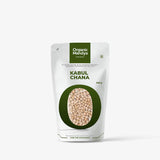
White chana (kabuli chana, Cicer arietinum) provides approximately 19 g of protein per 100 g raw (dry) and approximately 8.9 g of protein per 100 g cooked (boiled), according to the ICMR Indian Food Composition Tables 2017. This makes white chana one of the highest-protein common pulses in the Indian diet, closely comparable to rajma (22.9 g raw) and moong dal (24 g raw). At a glycaemic index of approximately 28, white chana also has the lowest GI of any commonly consumed Indian legume, making it exceptional for blood sugar management alongside its protein density. A single 200 g cooked serving (one standard bowl of chole) delivers approximately 17.8 g protein, 32% of the adult daily RDA.
White Chana Nutrition per 100g
Source: ICMR Indian Food Composition Tables 2017; USDA Food Data Central.
|
Nutrient |
Per 100 g Raw (Dry) |
Per 100g Cooked (Boiled) |
% Daily RDA (per 200g cooked) |
|
Energy (kcal) |
364 |
164 |
16% |
|
Protein (g) |
19.0 |
8.9 |
32% |
|
Carbohydrates (g) |
60.9 |
27.4 |
- |
|
Dietary Fibre (g) |
15.2 |
7.6 |
61% |
|
Total Fat (g) |
5.4 |
2.6 |
- |
|
Calcium (mg) |
105 |
49 |
10% |
|
Iron (mg) |
4.6 |
2.9 |
33% (women) |
|
Magnesium (mg) |
115 |
48 |
24% |
|
Potassium (mg) |
875 |
291 |
12% |
|
Zinc (mg) |
3.4 |
1.5 |
14% |
|
Folate (mcg) |
557 |
172 |
86% |
|
GI |
~28 |
~28 |
Very low |
The number most people need: A standard bowl of chole/chana curry (approximately 200 g cooked) delivers ~17.8 g protein, ~15.2 g fibre, and only ~328 kcal - one of the best protein-to-calorie ratios in the Indian vegetarian diet.
Raw vs Cooked: Why the Numbers Differ
The apparent "drop" from 19 g protein (raw) to 8.9 g protein (cooked) per 100 g is NOT protein loss-it is dilution. When white chana is soaked and cooked, it absorbs water and roughly doubles in weight. The same 100 g of dry chana becomes approximately 210-220 g of cooked chana. The total protein remains the same it is spread across more grams of total weight.
|
State |
Weight |
Total Protein |
Protein per 100g |
|
Raw (dry) |
100 g |
19 g |
19 g |
|
Soaked (8 hrs) |
~180 g |
19 g |
~10.5 g |
|
Cooked (boiled) |
~210-220 g |
19 g |
~8.6-9.0 g |
Practical takeaway: When calculating your protein intake from white chana, use the cooked value (8.9 g/100g) multiplied by your actual cooked serving size. A standard 200 g cooked serving = 17.8 g protein.
Complete Macronutrient and Micronutrient Profile
Per 100 g raw (dry) white chana. Source: ICMR IFCTs 2017.
|
Nutrient |
Per 100 g Raw |
Notes |
|
Energy (kcal) |
364 |
Moderate; comparable to most dals |
|
Protein (g) |
19.0 |
Among highest for common Indian pulses |
|
Carbohydrates (g) |
60.9 |
Complex; very low GI (~28) |
|
Dietary Fibre (g) |
15.2 |
Very high; gut health + satiety |
|
Total Fat (g) |
5.4 |
Higher than most dals; includes healthy fats |
|
Calcium (mg) |
105 |
Meaningful bone mineral contribution |
|
Iron (mg) |
4.6 |
Non-haem; pair with Vitamin C for absorption |
|
Phosphorus (mg) |
312 |
High; bone and energy metabolism |
|
Magnesium (mg) |
115 |
29% of daily RDA; muscle and nerve function |
|
Potassium (mg) |
875 |
Very high; cardiovascular and electrolyte support |
|
Zinc (mg) |
3.4 |
31% of daily RDA; immunity and reproductive health |
|
Folate (mcg) |
557 |
139% of daily RDA; critical for pregnancy |
|
Vitamin B6 (mg) |
0.5 |
Neurotransmitter production |
|
Manganese (mg) |
2.2 |
96% of the daily RDA; bone and antioxidant |
Three standout numbers: White chana's folate content (557 mcg/100g raw) provides 139% of the adult daily RDA in a single 100 g dry serving, making it one of the richest natural folate sources available, critical for pregnant women (neural tube defect prevention). Its potassium (875 mg) rivals bananas. Its GI of ~28 is the lowest of any common Indian legume.
White Chana vs Other Protein Sources: Comparison
|
Food |
Protein per 100g Cooked |
Fibre (g) |
GI |
Cost (Rs/kg dry) |
Complete Protein? |
|
White Chana (kabuli) |
8.9 |
7.6 |
~28 |
Rs 100-150 |
No (low methionine) |
|
Brown Chana (kala/desi) |
8.2 |
8.0 |
~30 |
Rs 80-120 |
No (low methionine) |
|
Rajma (kidney beans) |
8.7 |
6.4 |
~29 |
Rs 120-180 |
No (low methionine) |
|
Moong dal (cooked) |
7.0 |
1.2 |
~38 |
Rs 100-140 |
No (low methionine) |
|
Masoor dal (cooked) |
9.0 |
1.8 |
~29 |
Rs 80-120 |
No (low methionine) |
|
Paneer (raw) |
18.3 |
0 |
Very low |
Rs 350-450 |
Yes |
|
Egg (boiled, 1 whole) |
13.0 |
0 |
0 |
Rs 6-8/egg |
Yes |
|
Chicken breast (cooked) |
31.0 |
0 |
0 |
Rs 200-300 |
Yes |
|
Tofu (firm) |
8.0 |
0.3 |
~15 |
Rs 100-150 |
Yes |
|
Sattu (roasted gram flour) |
20-22 (dry) |
7.6 |
~40 |
Rs 80-120 |
No (low methionine) |
White chana's competitive advantage: At Rs 100-150/kg dry (yielding approximately 2.2-2.5 kg cooked), white chana delivers the most affordable plant protein per rupee alongside exceptional fibre, folate, and the lowest GI of any Indian legume. For the rajma comparison, see our [rajma nutritional value per 100g guide]. For moong dal, see our [moong dal protein per 100g guide].
Amino Acid Profile
White chana provides all 9 essential amino acids but has two relative weaknesses:
|
Amino Acid |
White Chana Level |
Adequate? |
Solution |
|
Leucine |
Good |
Yes |
- |
|
Isoleucine |
Good |
Yes |
- |
|
Valine |
Good |
Yes |
- |
|
Lysine |
High |
Yes |
White chana is lysine-rich (unlike cereals) |
|
Threonine |
Good |
Yes |
- |
|
Tryptophan |
Moderate |
Yes |
- |
|
Phenylalanine |
Good |
Yes |
- |
|
Methionine |
Low |
Limiting |
Pair with rice, wheat, or millets |
|
Cysteine |
Low |
Limiting |
Pair with cereals or seeds |
The Indian dietary solution: The classic dal-roti and dal-chawal combinations are nutritionally designed to complement legume and cereal amino acid profiles. Cereals (rice, wheat, millets) are high in methionine but low in lysine; legumes (chana, dal, rajma) are high in lysine but low in methionine. Eating both at the same meal creates a complete amino acid profile , the traditional Indian thali is a protein-engineering masterclass.
Daily Intake for Different Health Goals
|
Goal |
White Chana (cooked) per Day |
Protein from Chana |
Total Calories |
Notes |
|
General health |
150-200 g (1 bowl) |
13-18 g |
246-328 kcal |
Meets 24-32% of protein RDA |
|
Muscle building |
200-300 g (1.5-2 bowls) |
18-27 g |
328-492 kcal |
Pair with rice/roti for complete amino acids; add curd |
|
Weight loss |
150 g (1 bowl) |
13 g |
246 kcal |
High fibre + protein = excellent satiety; low GI prevents cravings |
|
Diabetic management |
150-200 g |
13-18 g |
246-328 kcal |
GI ~28; among the lowest-GI protein sources available |
|
Pregnancy (folate) |
100-150 g (dry equivalent ~50-70 g) |
9-13 g |
164-246 kcal |
Provides 80-120% of daily folate RDA from food |
Best Cooking Methods to Preserve Protein
|
Method |
Protein Retention |
Notes |
|
Pressure cooking (3-4 whistles) |
~95% |
Best method; minimal nutrient loss |
|
Soaking overnight + boiling |
~90-95% |
Traditional; soaking reduces phytic acid and cooking time |
|
Sprouting + light cooking |
~95% + enhanced bioavailability |
Sprouting increases Vitamin C and reduces anti-nutrients |
|
Extended slow-cooking (3+ hours) |
~85-90% |
Some protein denaturation at prolonged heat |
|
Canned chana |
~80-85% |
Convenient but higher sodium; lower folate retention |
Best practice: Soak white chana overnight (8-12 hours), drain, and pressure cook with fresh water for 3-4 whistles. This reduces phytic acid (which inhibits iron and zinc absorption), softens the grain for digestibility, and retains maximum protein and folate. Adding a pinch of sodium bicarbonate (baking soda) to the soaking water further reduces cooking time and anti-nutrients.
Is White Chana Good for Weight Loss?
Yes, white chana is one of the best weight loss foods in the Indian diet, for three specific reasons:
Reason 1: Highest fibre of common Indian legumes (15.2 g/100g dry). This fibre produces satiety signals that last 4-5 hours after a meal, naturally reducing total daily calorie intake.
Reason 2: Very low GI (~28). The slow glucose release prevents the insulin spike that triggers fat storage and the subsequent blood sugar crash that triggers hunger 2-3 hours after high-GI meals.
Reason 3: High protein-to-calorie ratio. At 8.9 g protein per 164 kcal (cooked), white chana has a protein calorie percentage of 22% - comparable to many non-vegetarian foods and significantly higher than rice (8%) or wheat roti (14%).
For optimal weight loss: Consume 150 g cooked white chana (1 bowl, 246 kcal) as part of a fibre-rich meal with salad and roti. This meal provides approximately 13 g protein, 7.6 g fibre, and sustained energy for 4-5 hours at under 400 total kcal. Avoid deep-fried chana preparations (chole bhature adds 300-400 kcal from the bhatura alone).
Side Effects and Precautions
-
Flatulence: White chana contains raffinose and stachyose - oligosaccharides that human intestinal enzymes cannot fully break down. Gut bacteria ferment these sugars, producing gas. Solution: soak overnight (reduces oligosaccharides by 20-30%), cook thoroughly, and increase chana consumption gradually over 1-2 weeks.
-
Purine content (gout): White chana has moderate purine content. Individuals with gout or hyperuricaemia should moderate intake (100-150 g cooked, 2-3 times per week) and consult their physician.
-
Kidney disease (CKD): White chana's high potassium (875 mg/100g raw) and phosphorus (312 mg) require physician-guided portion control for CKD patients on restricted mineral diets.
-
Phytic acid: Raw white chana contains phytic acid that inhibits iron and zinc absorption. Overnight soaking + pressure cooking reduces phytic acid by 30-50%.
FAQs
Q1. How much protein is in 100g of white chana?
100 g of raw (dry) white chana contains approximately 19 g protein per ICMR Indian Food Composition Tables 2017. When cooked (boiled), 100 g provides approximately 8.9 g protein the apparent reduction is water absorption (the grain roughly doubles in weight), not protein loss. A standard 200 g cooked serving (one bowl of chole) delivers approximately 17.8 g protein 32% of the adult daily RDA.
Q2. Is white chana good for muscle building?
Yes, white chana is one of the best plant-based muscle-building foods in the Indian diet. At 8.9 g protein per 100 g cooked, it provides meaningful protein alongside 7.6 g fibre and a GI of ~28 for sustained energy. For complete amino acid coverage, pair with rice, roti, or millets (which supply the methionine and cysteine that chana lacks). For serious muscle building, consume 200-300 g cooked white chana daily alongside other protein sources to reach the 1.6-2.0 g/kg bodyweight target.
Q3. Which has more protein - white chana or moong dal?
White chana has more protein per 100 g cooked (8.9 g) than moong dal (7.0 g) and dramatically more fibre (7.6 g vs 1.2 g). Moong dal is lighter, easier to digest, and cooks faster,making it better for illness recovery and children. White chana is better for sustained energy, weight management, muscle building, and blood sugar control (GI ~28 vs ~38). For the complete moong dal analysis, see our [moong dal protein per 100g guide].
Q4. Is white chana good for weight loss?
Yes, white chana is excellent for weight loss. Its combination of high protein (8.9 g/100g cooked), very high fibre (7.6 g), and very low GI (~28) produces 4-5 hours of satiety at moderate calorie density (164 kcal/100g cooked). One 200 g serving provides 17.8 g protein at only 328 kcal. Avoid deep-fried preparations; prefer pressure-cooked or boiled chana with salad and roti.
Q5. What is the glycaemic index of white chana?
White chana has a GI of approximately 28 per Atkinson et al., Diabetes Care, 2008 the lowest of any commonly consumed Indian legume. This makes it exceptionally suitable for type 2 diabetes management, weight loss, and sustained energy. For comparison: moong dal ~38, masoor dal ~29, rajma ~29, and rice ~73.
About This Article
Sources:
-
ICMR (Indian Council of Medical Research) - Indian Food Composition Tables 2017, NIN Hyderabad. Primary source for white chana nutritional values (protein 19 g raw, 8.9 g cooked, fibre 15.2 g, folate 557 mcg per 100 g dry).
-
USDA Food Data Central - Supplementary chickpea (Cicer arietinum) nutritional data.
-
International Tables of Glycemic Index and Glycemic Load Values (Atkinson et al., Diabetes Care, 2008). Source for white chana GI (~28).
-
Published legume protein research - Source for amino acid profile, phytic acid reduction studies, and oligosaccharide content data for chickpeas.


